
What lies behind moving stage designs: technology between scene and safety
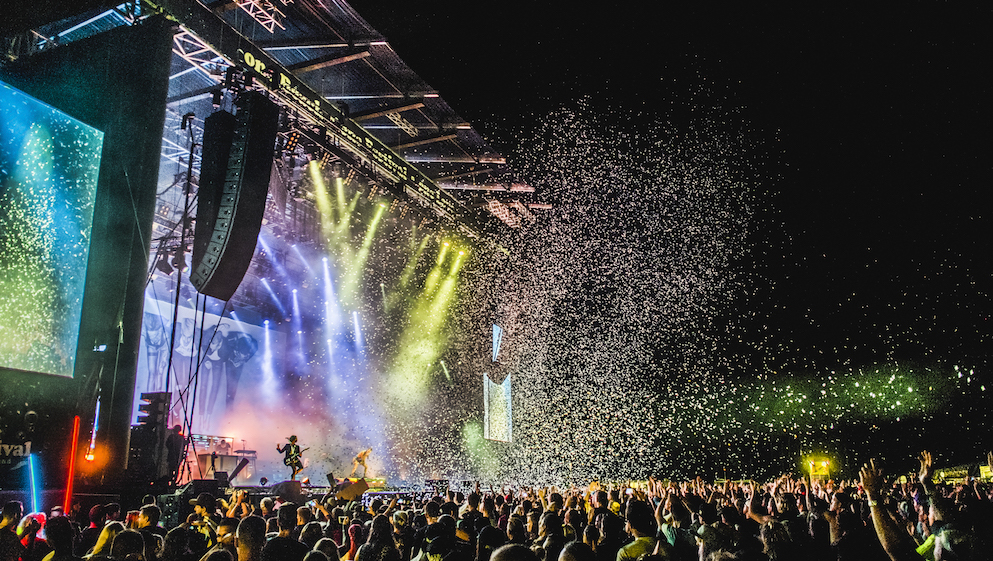
A wall tilts to the side, a podium changes the perspective, and suddenly the next scene takes place in another room. For the audience, the change to the narrative is part of the experience. The technology behind it remains mostly invisible.
Even a seemingly simple movement raises questions: How far should something move, where is there space for it and how can the movement be safely incorporated into the entire stage?
The scene change has a technical side
A moving stage design can shape the rhythm of a performance. A backdrop frees the view of a second playing area; a podium changes the height at which a scene takes place. What looks like a single flowing process from the rows of seats begins behind the stage with a precisely described task. Should an element be raised, lowered or moved sideways? Do people have to stand on the moving surface, or does only a part of the decoration move?
These differences are technically significant. They influence which installation is even considered and what requirements are placed on its integration. The available space is also not arbitrary: a movable element needs space for its path, for the mechanics and for the areas that must remain free during operation. The visible scenery is therefore only a part of what is involved when Stage construction Is planned for a scene change.
Lift and cargo space must match
In a straight movement, the distance traveled is called lift. A pedestal that needs to change its height requires a different lift than a small cover that is only moved out of view for a short time. At the same time, the construction must fit into the existing building space. This refers to the space where an engine and its connection can actually be accommodated – not just the entire free area behind the stage set.
Especially here, it is worthwhile to look beyond the individual component. A drive can generate movement, but this does not yet determine how the moving part is guided. The guidance determines on which track it moves; the mounting connects it to the rest of the construction. In addition, there is the load to be moved and the question of in what position the components are to be installed. If you only look at the desired path, you may miss the space requirements of the complete installation.
This can also be understood without a construction drawing: If a set piece surface is to move evenly to the side, the statement “It must be movable” is not enough. Only the intended route, the guidance of the surface and its integration turn the desire for an effect into a describable technical task.
What mechanics are behind the movement
There is no universal drive principle for stage movements. In event technology, depending on the task, for example, trains for movements above the playing area and podiums for changes in the stage floor are considered. Other facilities can process or rotate elements sideways. What is a scene change for the audience can therefore be based on different constructions behind the scenes.
Even the direction of movement alone does not yet reveal how an installation is driven. A backdrop that disappears upwards is not automatically pneumatically moved; a pedestal is not simply made up of a cylinder under a plate. Supporting structure, guide, drive and control must fit the respective function. The question of what happens if a movement is interrupted or a component does not work as intended is particularly important. Such considerations cannot be deduced from the appearance of the stage effect.
Looking behind the scenes therefore leads less to a single spectacular component than to the interplay of many decisions. The mechanics must enable the desired movement, while the complete setup can be operated under the prescribed conditions.
Compact pneumatic drives as a construction principle
An example from general movement technology shows why lift and built-in space are considered together: In a Telescopic cylinder Extending elements are arranged in one another. The underlying principle can be interesting if only limited space is available for linear movement.
For example, one model works via a two-stage, double-acting pneumatic drive. “Pneumatic” means that compressed air is used for movement; “double-acting” describes the air-powered movement in both directions. Various piston diameters and selectable stroke lengths up to 1000 millimeters are possible. Different types of mounting and a variant with position detection are also offered.
Such information helps to understand a construction principle. However, they neither indicate that this series of units is used on a stage, nor do they prove suitability or approval for scenic applications. Even if the lift and dimensions on paper fit a movement task, the guidance, load, control and requirements for the complete setup must be clarified separately. A compact construction form does not imply a ready-made solution for a scene change.
Safety is part of the construction
As soon as parts of a stage move, the gaze also turns to the people in their surroundings. Who can stand still during a change in the movement area? What needs to be secured against unintended movement? With work tools for the scenic movement of people, the questions become particularly clear. For this particular application area, the explain Instructions from DGUV Information 215-320 on work tools for the scenic movement of people Requirements in connection with the Occupational Safety and Health Regulations and the relevant accident prevention regulations.
This is to be distinguished from the examination of mechanical installations. DGUV principle 315-390 deals with this topic. The two publications have different focuses; the mention of them does not imply that every set movement is subject to the same rules. The requirements that apply in a specific case depend on the installation and its use.
For understanding a moving stage, the boundary between component and installation is especially crucial. Data on a drive can support technical selection. They neither replace the assessment of the entire construction nor its necessary testing. An installation includes, among other things, the connection of moving parts and the concept for their operation. Especially where people could be at risk, it would be misleading to read the properties of a single component as a safety proof for the whole.
What needs to be clarified in a concrete planning process
At the beginning, the desired effect is on stage: What should the audience see, and what actual movement is necessary for this? After that, the task becomes more specific. The required lift must fit the existing installation space. The load to be moved, its guidance and the connection to the rest of the structure determine which technical routes can be tested at all. The installation location and the conditions during use also belong to this description.
Only on this basis can one speak meaningfully of a drive. Subsequently, questions remain about the complete installation: How is the movement controlled? Who operates it? Which areas must be taken into account when people stand on or next to moving parts? What tests are required for the intended installation? The answers belong to the technical planning of the respective project; they do not arise from a product feature alone.
If a backdrop disappears or a playing area changes during the next theater evening, the mechanics are probably still hardly visible. This is precisely part of the effect. However, behind the seemingly effortless scene change lies a precise task: a planned movement must be spatially possible, fit the staging and be implemented responsibly as part of the entire stage setting.