“Political rhetoric has become much more radical since 2013” – Director Deniz Gamze Ergüven in interview
· 7 min read
Mustang Regisseurin und bald Oscarpreisträgerin Deniz Gamze Ergüven?
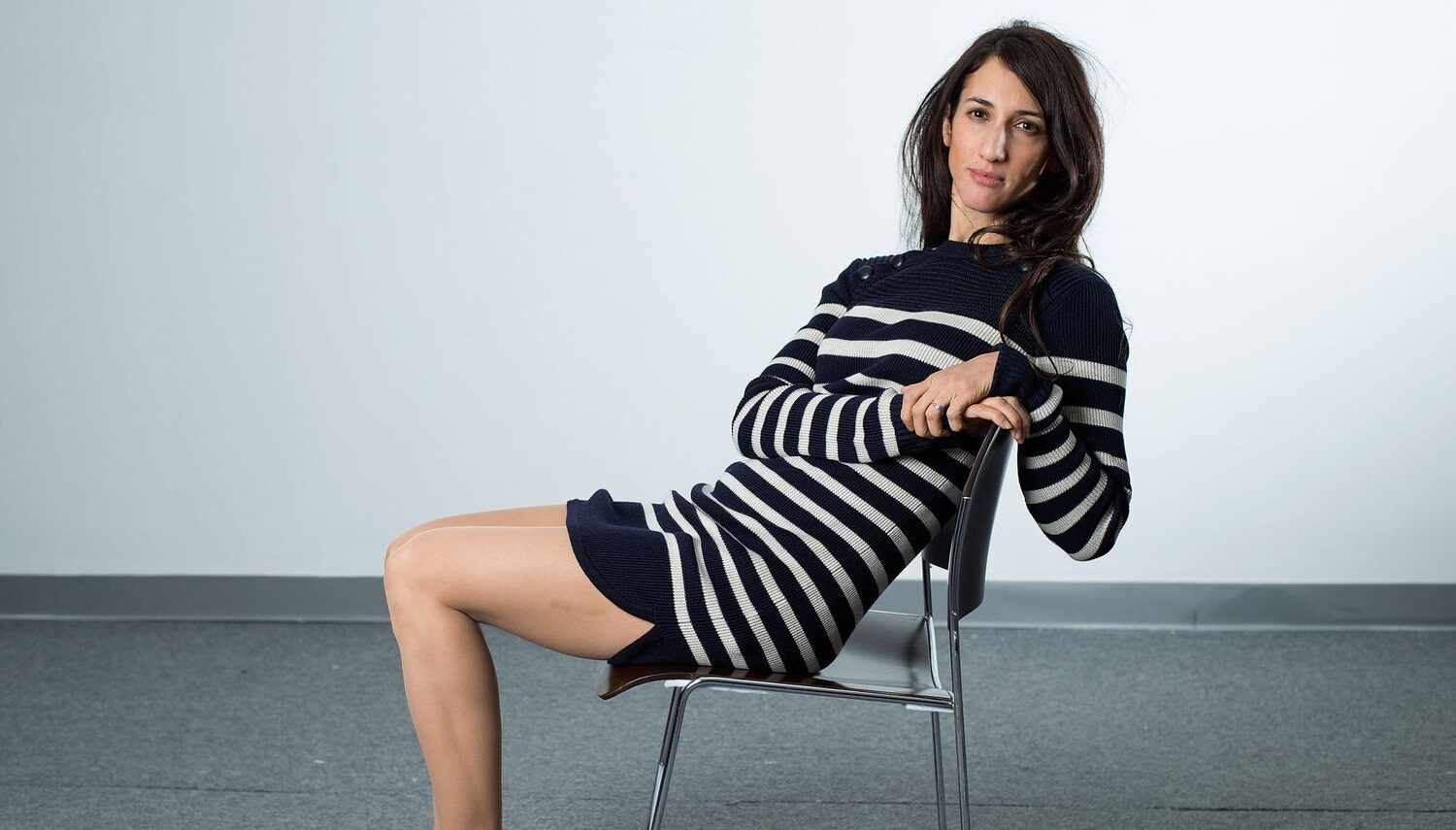
After being selected for the Directors’ Fortnight at Cannes, Deniz Gamze Ergüven’s “Mustang” has collected 24 awards at film festivals around the world so far. The crowning moment could come on 28 February, as the drama has been nominated for the Oscar for Best Foreign Language Film of the Year. “Mustang” uses the story of five sisters to denounce a hysterically over-sexualising society that allows girls and women no space for self-development.
In the interview, the director, who was born in Ankara in 1978 and has been shuttling between Turkey, France and the USA since her childhood, discusses the unique qualities of her impressive work, takes a stand on Turkey’s political situation and explains why the film could not have been set in Istanbul…
Ms Ergüven, “Mustang” appears to be set at the end of the world, in the middle of nowhere. How did you find this location?
Deniz Gamze Ergüven: We really were looking for a place that visually looked like the end of the world! (laughs) It had to be somewhere that wasn’t instantly recognisable and at least 1,000 kilometres away from Istanbul. There were also many aesthetic requirements that influenced the choice more than anything else. It started with the house, from which you needed to be able to see certain things – there had to be a view over the sea as well as onto the street. This called for some pretty intense location scouting along the Black Sea. We honestly visited every single one of those villages until we found the right one – İnebolu was even better than what I had imagined. The nature there felt untouched and the sea dangerous. The architecture was very special. Out of all that, the perfect place emerged. But above all, it had to look like the end of the world.
Mustang director and soon-to-be Oscar winner Deniz Gamze Ergüven?
You mention the 1,000 kilometres separating the location and Istanbul. How important was it to you not to make a film set in Istanbul?
That distance creates a kind of horizontal wall the girls have to overcome. Turkey is anything but a country of cities. However, they really influence the image of Turkey. Of course there are also many much more modern places. In these cities, you’re also much more connected to the rest of the world. In Istanbul and Ankara you meet very modern people, but equally, you can find people living very traditional lives. Turkey’s rural areas are sparsely populated and the villages are barely inhabited. That scene in the wedding night when Ece has to go to hospital to prove her virginity is based on a story from a doctor in Ankara. That happens there 40 to 50 times during wedding season – so it’s not just the reality of remote villages.
Your film’s title, “Mustang”, describes the girls in your film very aptly. How do they become Mustangs for you?
A mustang, mythologically, means someone with no master or ruler. That fits really well. I wanted to find something that describes the girls and their temperament, and their strength. Visually, the girls’ hair reminded me of wild animals. The very first sentence of my script reads: Lale has something of a wild animal. But which one? As they tore through the village streets, running and playing, it felt like a herd of horses – that’s how I arrived at Mustang. Afterwards it all felt quite obvious. When I looked around and saw a girl I’d call a mustang, it was always a girl with a certain temperament.
The interesting thing about Lale, the youngest, is that she emancipates herself by observing her sisters and their fates – she doesn’t learn from books or at school. Is the hope for liberation from within oneself behind this?
I always saw the sisters as a sort of five-headed being. Over the course of the story, this being loses body parts, in very painful ways, but it learns things, how to adapt and hit back. By the end of the journey, you know everything that was lost along the way. It’s a double-edged sword. The first time she tries, she still fails at this 1,000 kilometre road. As the baby of the family, Lale carries within her the experiences of all those she saw fail along the way. She is the fruit of a very special tree. She’s always part of the whole and never an isolated element.
A scene that really lingers is certainly the one where the girls are supposed to swap their clothes for these sack-like garments and rebel…
Yes, those shapeless, shit-coloured dresses. They start tailoring them and making something out of them. That wasn’t in the script, it developed as we worked on the scene. I suggested it to the girls.
How hard is it for girls in Turkish society?
With this film I wanted to denounce this constant sexualising of everything. For example, the scene where the girls are sitting on the boys’ shoulders: not only are they sexualised, but at such an early, young age. It’s always there somehow. There’s an example I always like to use: a headmaster decreed that boys and girls shouldn’t use the same staircase because, whatever happens, when you’re going to your maths class at eight in the morning – it’s about sex – and so they sexualise everything. That narrows the perspective so much and leads, if you think it through to the end, to girls not being able to do anything at all. They’re not allowed to leave the house and constantly have to hide themselves away.
What part does the fact that you no longer live in Turkey play in this observation?
It has nothing to do with that. I’ve always been between countries. The effect is rather that I’m not constantly immersed in daily life, but when I go back, things strike me all the more strongly – and this sexualisation really bothers me.
It definitely helps to step out of a system in order to be able to judge things…
But that works both ways. When I look at Europe from Turkey and see two million refugees in Turkey and at the same time the reaction of countries struggling to take in 20,000, I find that crazy! You can’t just say, ‘that doesn’t exist’ or ‘that’s nothing to do with me’. The advantage of carrying two cultures within yourself is that your own frame of reference is broader.
How do you perceive Turkey, which has changed so much over the last two or three years?
Since the AKP, a religious party, came to power – since 2011 – political rhetoric has changed and, since 2013, has become much more radical. From the start it was uncomfortable that religious groups were gaining power in a country with such a secular tradition. At the beginning, they presented themselves as doers, as people who deal with everything, but slowly they’re taking off the mask. Turkey was always special because, culturally, it was very close to both Europe and the Orient. You really feel that. At the same time, Turkey is a very young country, very dynamic. Every week there, there are five different stories as harrowing as that of the dead boy on the beach – but internationally, they get no attention. That’s five nightmares a week. What comes to light through the media, including social media, is incredibly intense.
Can that be compared, to help put it in context?
At the end of 2015 there were those two incredible racist incidents in LA – the Rodney King case, the black man who was beaten up, and the young girl who was killed in a supermarket. On that level, we have five every week. So it’s not like one big event suddenly changes the agenda.