
What lies behind Berlin’s stages: Stage construction for festivals and open-airs
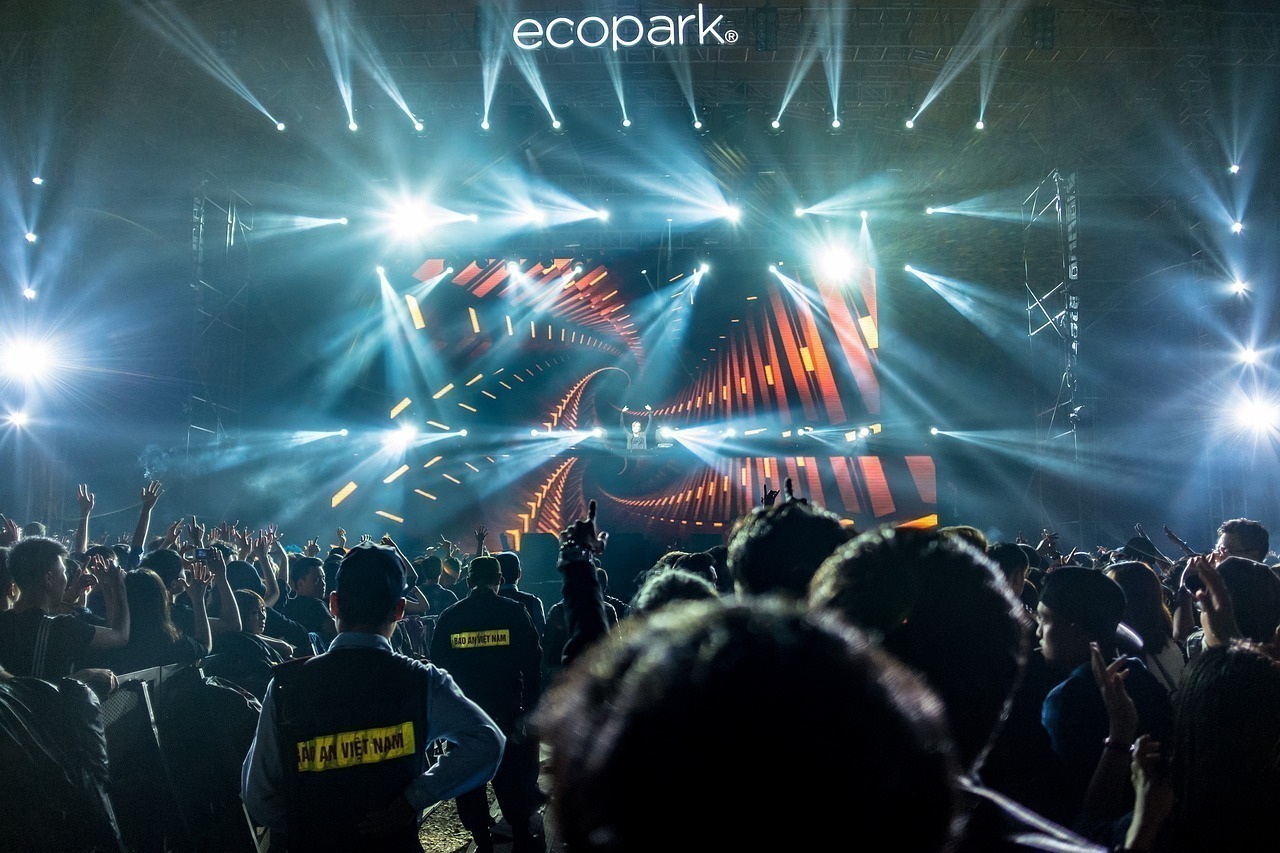
Anyone standing at an open-air concert on Tempelhofer Feld or at a festival in a Berlin park usually only sees the finished picture: a stage, light, sound, audience. But what is actually behind Berlin’s stages? The answer: careful planning, statics, tested technology and precise logistics.
It is precisely this preparatory work that determines whether an event goes smoothly and safely on stage – literally speaking. This text looks behind the scenes and explains what is technically involved next time you attend a concert.
Why stage construction is more than just boards and trusses
From the front, a stage looks simple: an elevated area, a roof, perhaps a back wall. Technically, it is a temporary structure that follows clear requirements. The supporting base area is created in the podium construction: individual podiums are aligned, screwed together, and connected to a flat surface on the respective substrate. On uneven terrain – on meadows, cobblestones or slight slopes – this alignment determines whether the stage is stable.
This creates the carrying frame for everything else. Traverses, modular lattice supports made of aluminum or steel, hold headlights, speakers, canvases and, for covered stages, the roof structure. The back wall visually closes off the stage, hides technology and backstage area and often serves as a surface for projections or sponsor logos. Each of these elements imposes loads that must be taken into account in the statics – including wind load at open-air events, because a large back wall acts like a sail in gusts.
For visitors, this means: The simple area on which the band stands is the visible end of a chain of calculations, material decisions and assembly steps. The fact that this work stands out so rarely is somewhat the quality feature – the less noticeable the construction, the better it was planned.
From the idea to the finished stage: conception, logistics, assembly
The way to the finished stage begins long before the first construction day. During the conceptual phase, the requirements of the event are clarified: How large must the playing area be? What technology is used? What does the ground support, and which paths must remain free for visitor flows and emergency services? From these answers, planning, coordination with organizers and authorities and finally the optimization of the construction for the specific location are created.
After that, logistics takes over: The stage builder coordinates all relevant processes, from the use of materials to delivery and the timing coordination with the other trades on site. Only then does the assembly begin, which can take from a few hours to several days depending on the size and complexity. Experience shows that more time is spent on preparation than on the visible assembly – if you plan well, you build faster.
An example of a service provider that offers this process from one source is Bühnenverleih Berlin – the BÜHNENVERLEIH Frank von Wysocki GmbH. The company was founded in 1988 as a single company for events, has been registered as a GmbH since 1996 and has specialized in stage, podium and stand construction. As an organizer, you would like to Rent stages in BerlinThen you will find there conception, logistics and assembly as a continuous process – not as separate individual services. Especially with Berlin events with tight deadlines – setup the day before, dismantling overnight – this interlocking pays off.
Safety on stage: test books, TÜV and B1 certificates
Temporary stages often only stand for a few days, sometimes only hours. Nevertheless, there are clear safety requirements for them, because they carry people and heavy equipment, and at festivals thousands of visitors are in close proximity. A central instrument is the test book: It documents the static evidence and the testing of the components used. Organizers and approval authorities can understand that a construction has been tested and approved for use.
In addition, independent controls are added, such as tests by the TÜV. Safety also plays a role with the materials themselves: components with a B1 certificate are made of non-flammable material. This class of building materials is usually standard for events in enclosed spaces and is also required for many open-air permits, because non-flammable materials delay the spread of a fire – and in an emergency, every minute counts.
Professional stage builders such as stage rental Berlin demonstrate the safety of their components through test books as well as TÜV and B1 certificates. For organizers, this is more than just a formality: without these certificates, obtaining approval for a larger event is difficult – and for the audience, such details ultimately depend on their own safety.
From the podium to the stands: What construction forms there are
If you look closely at the next event, you can discover the diversity of temporary construction right on site – because very few buildings are simply “the stage”. At Berlin events, you will encounter these construction forms especially often:
-
Podiums and stands: The carrying base area of each stage, modularly combinable, from the small speaker stage to the large open-air area
-
Round stages: For formats where the audience is around, such as fashion shows or concerts in the middle of the room
-
Choir and orchestra podiums: Graduated structures so that all musicians remain visible and easily audible
-
Stands: Spectator stands that open up the view of what is happening during public viewings, sporting events or parades.
-
Ramps and walkways: For barrier-free access or to bring artists closer to the audience
-
Camera and press pedestals: Elevated positions for media teams with a clear view over the crowd
-
Stage backdrops and press walls: As an optical finish, projection surface or sponsor wall
-
Special constructions: Individual solutions when standard formats are not sufficient, such as specially shaped stages or shelters for open-air events
The decisive principle in all these building forms is the same: from standardized basic elements, a solution is created that fits exactly to the location and the format – and that can be removed without leaving any traces after the event.

Sustainability in temporary construction: Reuse instead of throwing away
Temporary structures have an ecological advantage that remains invisible at first glance: they are dismantled and reused after the event, instead of being disposed of as a one-time construction. Podium floor areas, trusses and back wall elements return to the warehouse and are used again in the next project – in a new combination, in a different location, for a different format.
This rental principle fundamentally distinguishes professional stage construction from one-off constructions. Providers such as Bühnenverleih Berlin explicitly rely on sustainability and reusability: Stages and stands are assembled from pedestal base surfaces that are kept in stock and used multiple times. This has a practical side effect for organizers: Those who rely on proven material from their stock work with components whose properties are known – this simplifies statics, logistics and assembly and reduces material consumption per event.
What this means for Berlin’s event scene
Berlin’s festivals, open-airs and city festivals live off their atmosphere – and this atmosphere needs a solid foundation. Behind every successful event is an infrastructure of planning, proven technology and experienced setup teams, which ideally no one notices because everything just works.
If you see the lights turn on at the next concert on Tempelhofer Feld, in a park or on the Spree riverbank, you now also know what is underneath and behind it: podiums that have tamed the ground, trusses with calculated loads, certified components and a material cycle that turns today’s stage into tomorrow’s stands.