
Gut Feeling is King | Elyas M’Barek in Interview
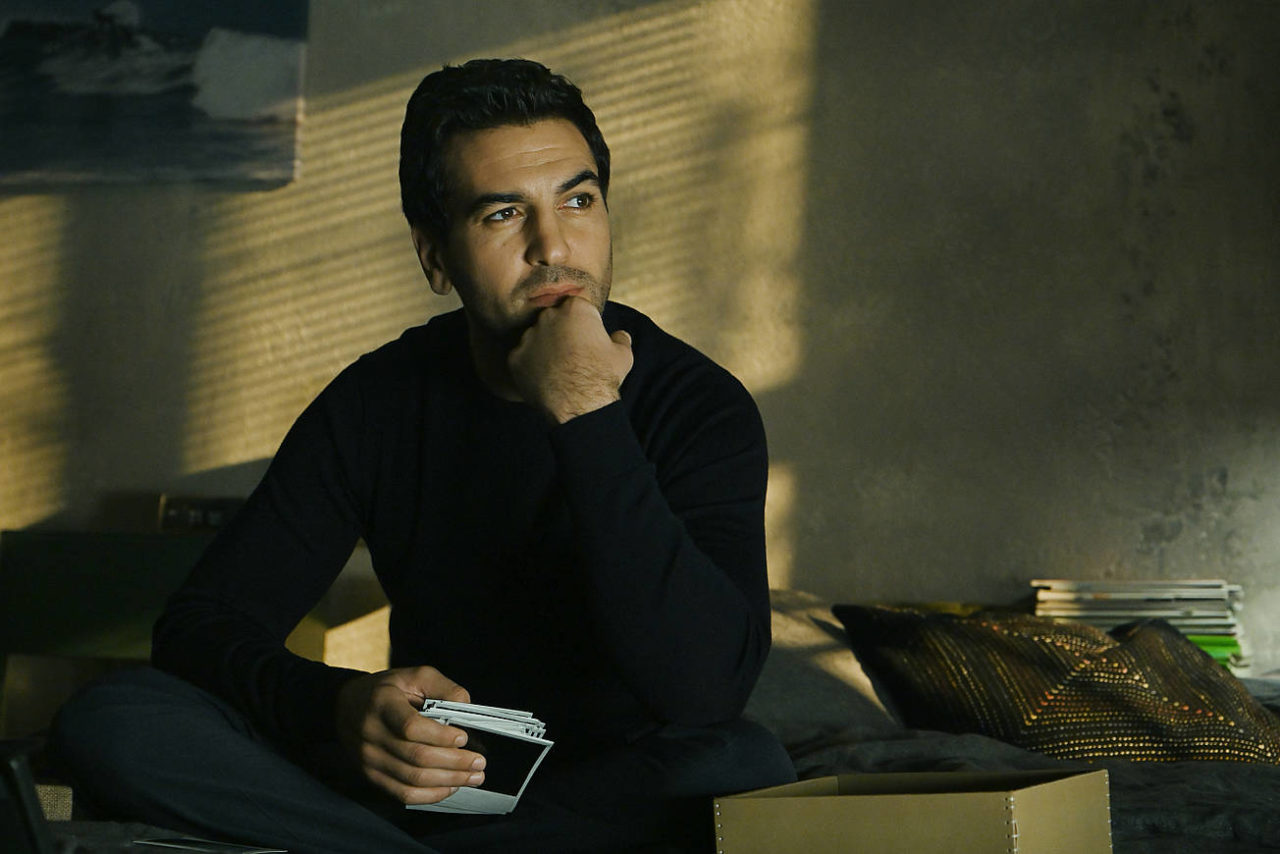
He is one of the few stars of German cinema. With the “Fack Ju Göhte” trilogy, Elyas M’Barek, 36, as the cool supply teacher Zeki Müller, reliably drew audiences of millions. His first appearance was in “Mädchen, Mädchen” while he was still at school, as the son of a Tunisian father and an Austrian mother. For his role in the ARD series “Türkisch für Anfänger”, he received the German Television Award.
This was followed by films such as “The Wave” and “Time You Change”, where he played the young Bushido. In 2011, he starred alongside Matthias Schweighöfer in “What a man”. After the historical epic “The Physician”, the thriller “Who am I”, the satire “Welcome to the Hartmanns”, or the drama “This Crazy Heart”, M’Barek is now appearing alongside Franco Nero in the political thriller “The Collini Case”, based on the novel by bestselling author Ferdinand von Schirach. Our contributor Dieter Oßwald spoke to the actor.
Mr M’Barek, in the film you defend Franco Nero. Was there a bit of German for Beginners for the Western legend?
M’Barek: There was indeed German for Beginners, I rehearsed his lines with Franco. He did have his own language coach, but mostly I helped a bit and read the dialogues out to him. Now and again, he would get terribly worked up and shout at himself when he didn’t get the German lines right straight away. I think the result now sounds very convincing.
Do you chat with Franco Nero about the good old Western days?

Of course I wanted to know what things were like back then. And he readily shared anecdotes about Senta Berger and Clint Eastwood. Franco is an incredibly impressive personality and a fantastic actor. It’s a big screen experience when he just sits there with his icy blue eyes and, without saying a word, lays all his emotions bare. We really became friends; when I visited him in Rome, he showed me his favourite restaurant and arranged a short visit to the Vatican for me.
Is one easily nervous when meeting screen legends?
No, I’ve been in the job long enough for that. You realise that the people behind the stars are basically all the same and just cook with water like everyone else. In my experience, the biggest stars are those who are the most relaxed and don’t need a circus around them. That was the case with Franco as well. He’s a truly lovely person, always has a mischievous twinkle and hasn’t lost his youthful spirit at all.
Is such a serious role a welcome change from comedy? Do you sometimes have to reinvent yourself?
Is that reinventing oneself? At least, I didn’t do that consciously. Of course, it’s nice to do something different. Above all, it’s nice to surprise the audience. But for me, the work is always basically the same. I try to choose scripts that appeal to me and that I’d like to see made into a film.
What role does gut instinct play in choosing projects?
My gut instinct usually tells me the right thing. That applies not only to my profession, but also to decisions or dealing with other people. I believe I have a good gut feeling, which I always listen to and in which I have great faith.
Do you play such a film with more seriousness than a comedy?
No, you take on every role with the same seriousness. You play comedies seriously as well, it’s not like I’m mucking about. My approach is always the same: it’s about moving the audience.
The subject of a Nazi past could come across as off-putting or alienating. Do you act as a door-opener to attract a younger audience?
Whether that works will only become clear after the film’s release. I’d be pleased if someone who hasn’t been interested in German thrillers before now has a reason to go to the cinema. “The Collini Case” is artistically valuable, but certainly accessible to a wide audience. It’s not a heavy drama; it’s moving and very emotional, but also exciting and entertaining.
You did plenty of research for the role, attended numerous trials and have mastered legal jargon – could you now defend yourself in court?
Absolutely not! Here I only did what I always do as an actor: pretend to be a character. I still haven’t the faintest idea about legal paragraphs. However, I do now know from the film what this largely unknown “Dreher Law” is all about – and the audience will learn about this scandal in “The Collini Case” as well.
“The Collini Case” isn’t your first political film, “Welcome to the Hartmanns” and “Who am I” also had social messages. How political do you see yourself? What grade would the former “Fack ju Göhte” teacher give to the current “Fridays for Future” movement?
I find the “Fridays for Future” demonstrations incredibly important. They’ve opened my eyes to issues I hadn’t really engaged with before. It’s very impressive that such young people are so committed and have launched this movement. I’d describe myself as a just person. All the more so, I like it when people stand up and do something against injustice – and that’s exactly what our film is about.

How familiar were you with Ferdinand von Schirach’s books?
I’m a huge fan of his and have read all his books. What’s always fascinated me about them is their incredible sobriety – they feel really authentic, genuine, close to life. You can immediately engage with them: when you read these books, you instantly become part of the story.
What else do you enjoy reading?
Unfortunately, not nearly enough at the moment, as I barely have the time and am almost exclusively reading scripts. I really like crime novels and thrillers. I’ve firmly resolved to finally read “The Golden Glove” by Heinz Strunk.
Would you have liked to play the role of the sadistic serial killer in the film adaptation?
It’s one of my biggest dreams to make a film with Fatih Akin – that just hasn’t worked out so far. Fatih was one of the filmmakers thanks to whom I first started enjoying German films.
Wim Wenders must also be on your wish list. After your joint ice cream advert, he was very taken with you…
Wim Wenders must have forgotten me; I haven’t heard from him since then, unfortunately. But if we’re dreaming big: Martin Scorsese is welcome to get in touch if he fancies it. Or Quentin Tarantino.
You’ve just finished shooting the comedy “The Perfect Secret” by “Fack ju Göhte” creator Bora Dagtekin. What’s it about?
It’s about three women and four men. And what can happen when these seven friends put their smartphones on the table and all messages and calls are shared. You’ll be able to see it in cinemas from October.
‘The Collini Case’ has been in cinemas since 18 April.

Photos: © Constantin Film