
‘Better to be laid-back than cool.’ – Interview with Detlev Buck on ‘Asphaltgorilla’
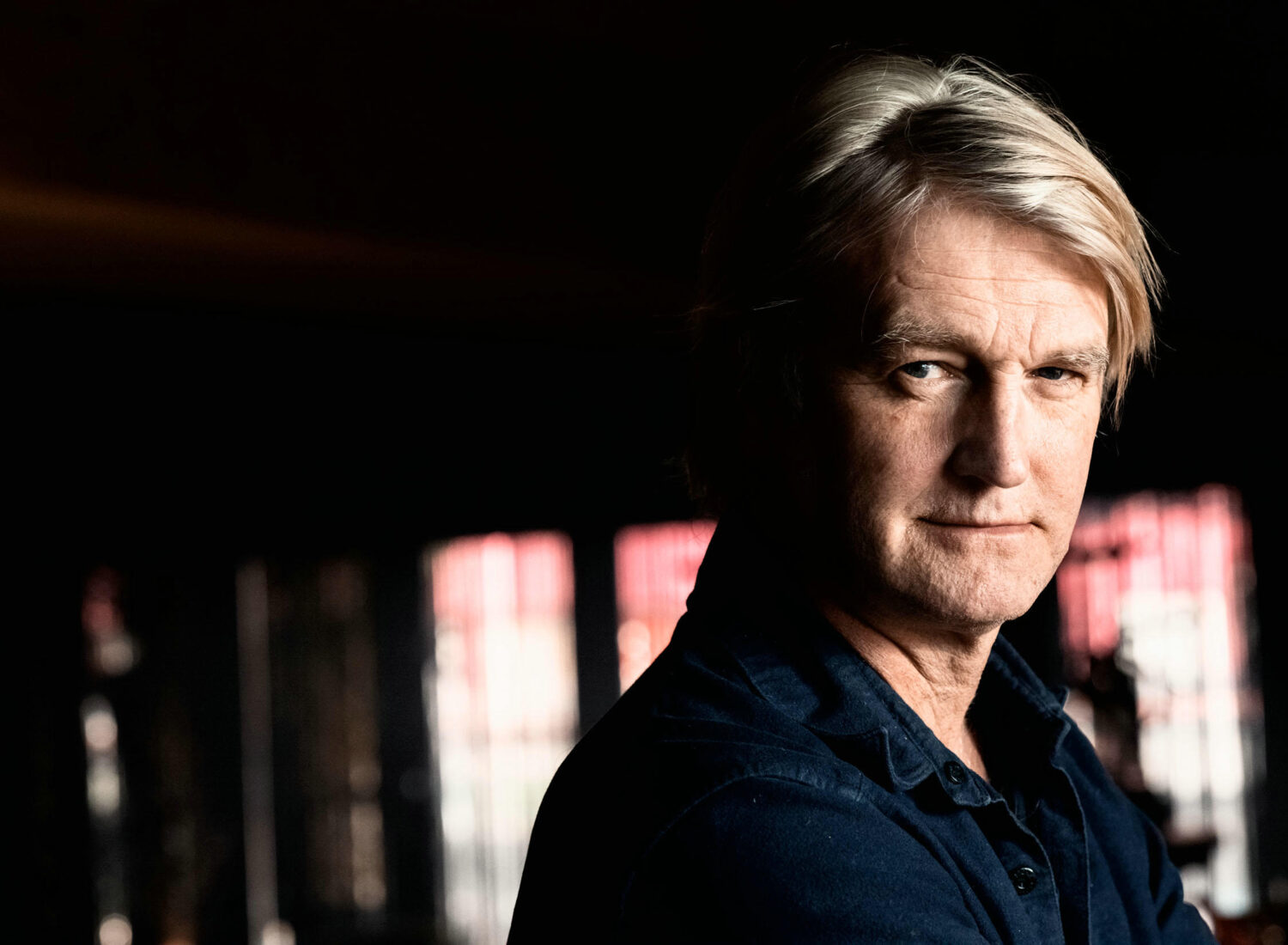
Buck is back: After his four children’s films ‘Bibi und Tina’, the director is taking a little holiday from Immenhof and presents a laid-back criminal farce based on the story by Ferdinand von Schirach. As in his early cult films ‘Erst die Arbeit und dann’, ‘Karniggels’ or ‘Wir können auch anders’, the trained farmer once again shows how to brilliantly cultivate the big screen with laconic humour.
The 56-year-old finds the label ‘cool’ pretty uncool; he prefers ‘laid-back’. That’s exactly what these ‘Asphaltgorillas’ are. The machos on a testosterone trip in their Lamborghinis hardly stand a chance against the clever women. Buck also pulls off a visual coup. [030] staff member Dieter Oßwald spoke with the director.
Mr Buck, couldn’t your film have been called ‘Erst der Lambo, und dann…’ (‘First the Lambo, and then…’)?
Buck: No, actually the film was going to be called ‘Der Schlüssel’ (‘The Key’), like the short story by Ferdinand von Schirach. But as an adaptation, that didn’t fit quite as well. Instead of the gorillas, perhaps ‘alpha males’ could have worked, or ‘beta males’. Something that really describes these testosterone-pumped lads well.
Real gorillas also appear – why is their background all in pink?
Buck: The gorilla appears in a dream. And our hero Atris simply likes to dream up all sorts of bizarre things.
The titles of your films have become proverbial. How do you come up with things like ‘Wir können auch anders’ or ‘Erst die Arbeit und dann’?
Buck: That’s got to do with where you’re shaped and where you grow up. Sometimes I do spots for NDR; for example, one said: ‘The best thing about the North is, we don’t let anyone tell us what to do.’ That would also make a nice film title. These are pearls of wisdom from your youth, things you’ve absorbed. Although ‘Asphaltgorillas’ is actually a brand new word creation. People know ‘Asphalt Cowboy’ with Dustin Hoffman and Jon Voight, who play castaways in the big city. That’s what we’re telling here as well.
You’ve described the film as a ‘declaration of love to Berlin’…
Buck: That’s actually what Kida—who plays El Keitar—always said. For me, a story like this could play out in many big cities, whether it’s Frankfurt, Hamburg or Berlin. Although, in Berlin it is striking how many Lambos are constantly tearing up and down the Ku’damm; motto: the louder, the better. It’s mad, really, and it’s nowhere near as extreme in other cities.
In Sofia Coppola’s ‘Somewhere’, Stephen Dorff enjoys driving his Ferrari in circles, and in the credits there’s a special thank you to the car manufacturer for the permission. Did you need a licence from the sports car makers to feature them in your film?
Buck: We didn’t need one, but on the other hand, Lamborghini turned down our request for support. They didn’t like the fact that the dog has to run alongside the car, and then there isn’t enough space for it inside afterwards. So we had to borrow our Lambos from somewhere, which wasn’t easy, especially in the colours we wanted. The gold coating had to be specially done with wrap film.
Unlike in the short story, your Atris has grown quite a bit.
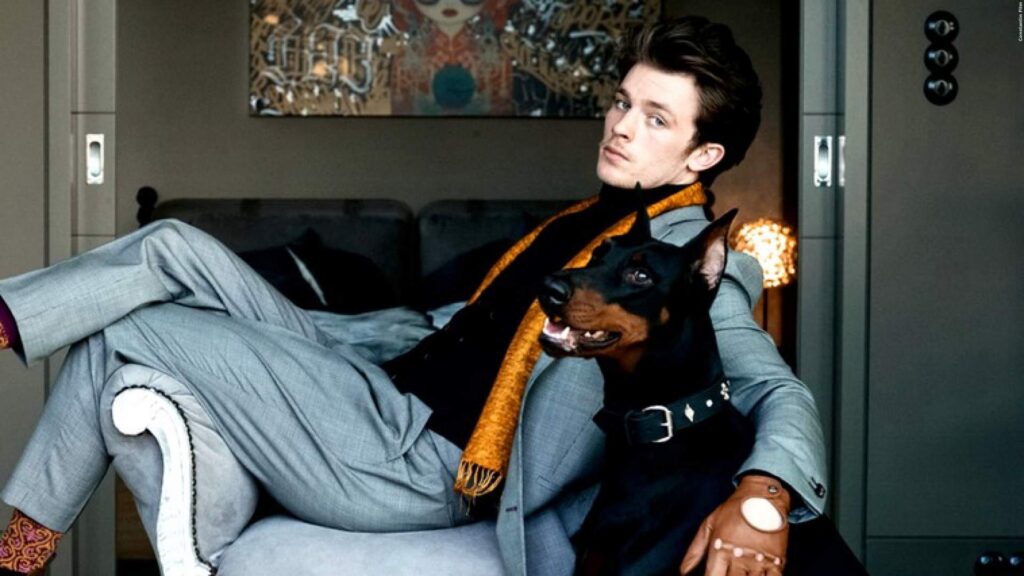
Buck:We had to completely reinvent the main character, because Atris in the short story isn’t much use for a film. Simple as that, because he’s thick as two short planks. He’s really daft. With us, though, he actually goes on the classic hero’s journey. Atris is a seeker, who realises he needs to make a decision in his life. He’s supposed to get married and take over the family business. He ends up inviting adventure into his car with the runaway woman, without really knowing what he’s doing. This mysterious woman materialises out of nowhere, a femme fatale who pushes Atris to stand up to his boss for the first time and to liberate himself.
With his best mate Frank, it’s more a case of ‘Give the monkey some sugar’, isn’t it?
Buck: Everyone probably knows friends like Frank: always got a big scam going on. First one with a moped. Success with women. Always knew how everything worked. And always overdid it. And yet, the friendship is so strong that Atris forgives his mate, even after being betrayed.
In the short story it says you can’t trust any woman. In your film, the women come off much better…
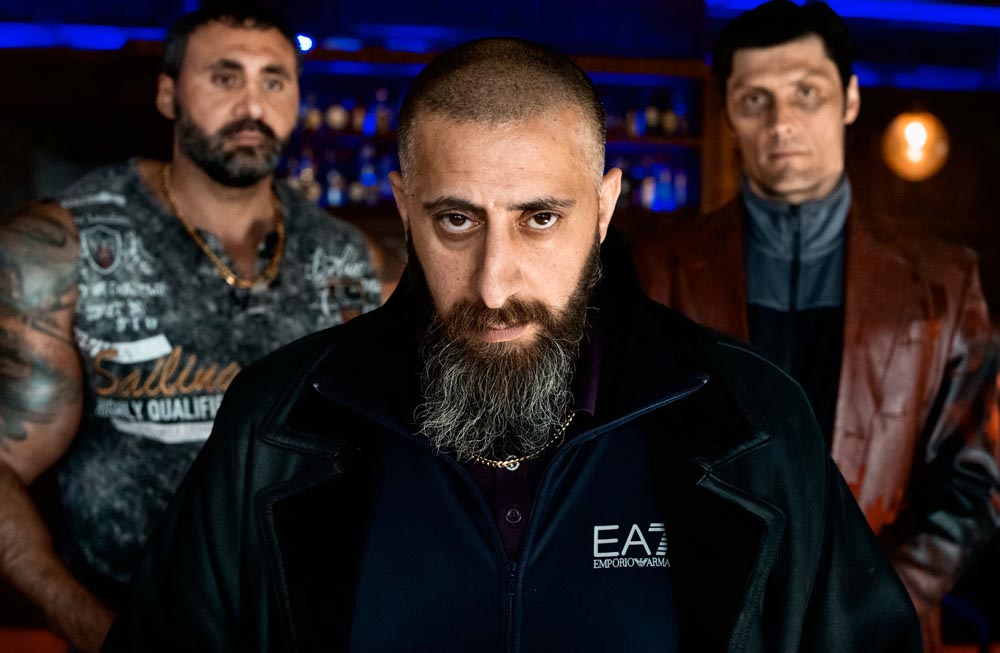
Buck: That’s right, in our version it’s the woman who questions the men’s status. It’s especially clear in the conversation with El Keitar, where Marie confidently provokes him. And his phobia about shaking a woman’s hand comes across as pretty ridiculous in the end. And our Mongolian hitwoman is clearly superior to the male competition.
How important is it to you that the viewers recognise such aspects of the story? Would you be disappointed if the audience just wanted to have fun?
Buck: It depends on how an audience is wired. With any good story, there’s always the inner and the outer arc. The outer arc is the mistaken identity story with the counterfeit money and the big deal. The inner story is the romance.
How much fun is it to stage violence?
Buck: Violence is part of the short story, and when I once got punched in the nose, the adrenaline was so high that I saw everything in slow motion, even afterwards. That’s where the idea came from with Ferdi Fischer, and working with the slam artist on it was a lot of fun to develop.
After four cosy children’s films with ‘Bibi und Tina’, did you feel the need to make a genre film like this? Is there a bit of testosterone when you’re directing as well?
Buck: No, there’s no testosterone rush when I’m directing. I’m more delighted by certain images you’ve created that convey a convincing world. The hero’s journey is my journey, too. And it was simply a pleasure to engage with that genre. While we were shooting four parts of ‘Bibi und Tina’, we were preparing this project in parallel. It was the hobby, the contrast! I always need a bit of Yin and Yang!
Coolness has always been on Buck’s label. Are you happy with that description?
Buck: The term ‘cool’ is such a massive thing. To be honest, I prefer ‘laid-back’. If you’re trying to be cool, that’s when it’s wrong.
How laid-back is the opening credits, which now just says ‘by Buck’?
Buck: ‘Asphaltgorillas by Detlev Buck’ – that just doesn’t read well. Besides, people often just call me that anyway.

‘Asphaltgorillas’ starts in German cinemas on 30th August.
Photo: © Olga Film