
Guillermo Del Toro: “I Want to Feel Compassion for the Monster.”
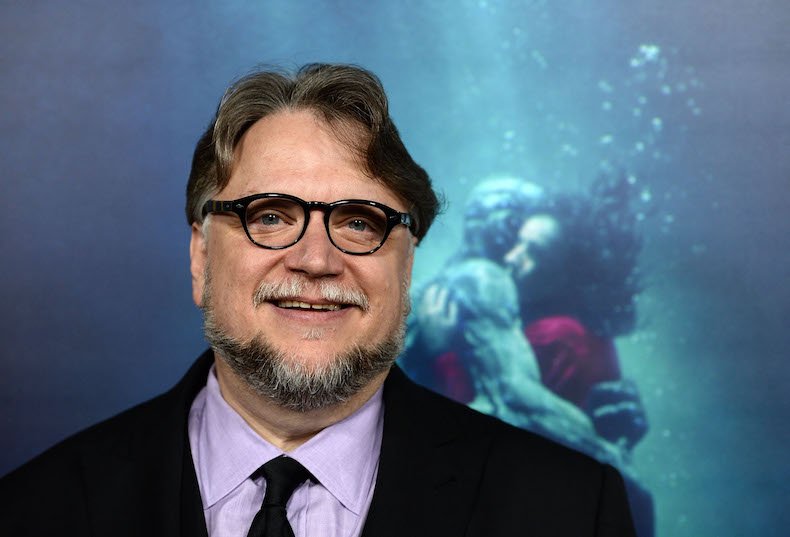
Guillermo Del Toro won the Critics’ Prize at Cannes and nine Mexican film awards in 1993 for his debut “Cronos”. Four years later, he made his Hollywood debut with the horror film “Mimic”. Following the comic adaptations “Blade II” and “Hellboy”, his enchanting fantasy spectacle “Pan’s Labyrinth” received six Oscar nominations, including one for Del Toro’s screenplay.
With “The Shape of Water”, the poetic love story between a cleaning lady and an amphibious creature, the Mexican director was awarded the Golden Lion in Venice and, with 13 Oscar nominations, is considered one of the hot favourites at the Academy Awards. [030] staff member Dieter Oßwald spoke with the director.
Señor Del Toro, how difficult is it to convince Hollywood to back such a poetic project?
Del Toro: I had developed the project with my own money over three years. I then offered the concept to just one studio, Fox Searchlight, with whom I’d had good experiences before. By the end of my pitch, everyone was in tears, which almost made me lose my voice. It’s a myth that Hollywood is only run by businessmen. If you have a moving story and convey it properly, you’ll find support.
Were there no concerns about the age rating?
Del Toro: Not at all. I said from the start: Sally Hawkins masturbates. There are sex scenes between her and the creature. It was clear from the outset this was going to be an R-rated film—which was accepted without fuss.
How significant is “The Shape of Water” for your career?
Del Toro: I simply had to make this project. All of my previous nine films had something to do with my childhood. Now I’m 53, so it was high time to finally make an adult film. It’s a film about love, which for me means loving your partner as they are. Without any expectation of perfection, without wanting to change them.

What meaning does the titular water have as a metaphor?
Del Toro: Water always takes the shape it finds itself in. As gentle as it can be, it’s also the strongest and most malleable force in the universe. Isn’t it the same for love? Love can take every form, whether it’s for a man, a woman, or a creature. I like films that are liberating and say: It’s good to be who you are.
You once said that monsters fascinated you even as a child. How does that influence this film?
Del Toro: In fairy tales, there are two variants. One says: monsters are evil, your parents are good. That’s why you should always follow their instructions. The other says: forget the rules, just be mad. The same goes for horror films. Some warn of monsters because all that is foreign is always dangerous. Others argue that the so-called idyllic family world isn’t as rosy as it appears. I’ve always preferred this second variant. I want to feel compassion for the monster. When I first saw Boris Karloff in “Frankenstein”, he was like the Messiah to me. From then on, monsters have had my absolute sympathy. They are just what they are. You can understand them perfectly—in contrast to humans, behind whose charming masks there are often abysses.
How do you get the ideas for your fantastic worlds? Do dreams give you inspiration?
Del Toro: Sleep is horrible for me. I only know of a single dream, but it’s haunted me since childhood: I can breathe underwater. My ideas arise from my inability to be bored. I’m always thinking. When I’m sitting in a restaurant and spot a red stain on the tablecloth next to me, I immediately concoct a murder scenario. That’s why my youngest daughter is never allowed to come home late! If she’s ten minutes overdue, I’ve already imagined the entire kidnapping and am waiting for the kidnappers’ call. (Laughs)
What role does the political aspect play? Are there parallels between the Cold War back then and today’s America?
Del Toro: Early 1960s America was idealised as a land of fantasy and fairy tales. Today’s “Make America great again” dreams exactly of that America. A great country if you’re white, male and heterosexual. But for everyone else, there’s no place. Setting the story in the 60s seemed much more effective to me than telling it in our time. A fairy tale holds much more magic than a current political drama.
The villains are called Richard Strickland and Robert Hoffstetler—are the German names just coincidence?
Del Toro: Hoffstetler is from Texas, where there are to this day huge influences from German immigrants. Near El Paso, there are three towns that are entirely German. You’ll find really good sausages there, as well as many such names. As for Strickland, I simply liked the sound, because it reminded me of “stricken with disease” (afflicted by a disease)
How does such a monster come into being?
Del Toro: Everything starts with clay models. I place these figures on my desk and circle them with a lamp to see all the shadows. Shadows are hugely important later, as they work like expression lines. With the face, mere millimetres at the corner of the mouth can decide the right balance between human and amphibian. For the finishing touches, the women at my house had the final say: more bum, or less? Enough six-pack? Wider shoulders or slimmer? I wanted a creature you could fall in love with.
Why is it important that there’s an actor inside the amphibian suit and not just computer effects?
Del Toro: Without an actor inside the costume, you’ve no film—and Doug Jones is a fantastic performer. When he comes into the cinema for the first time and you sense the creature has never seen a film before, those are real actor’s moments. Or that key scene in the bathroom: Richard Jenkins had initial concerns about performing with a colleague in costume. Afterwards, he said, as soon as he heard ‘Action!’, he felt he was facing an ancient water god.
How did you experience winning the Golden Lion in Venice?
Del Toro: I’d already flown back to Los Angeles when I got a call at six in the morning. I knew then we’d won something—who else would ring at that time? I was just told to come back to Venice. After I arrived, I had only 30 minutes to change for the ceremony and get to the cinema—where the Golden Lion was waiting for me.
Photo: © Amanda Edwards/WireImage