“I’m Much Happier Than Before!” – Interview with Ellen Page
· 4 min read
She began her career as a teenager in ambitious dramas such as ‘Hard Candy’ and ‘Juno’ (for which she received an Oscar nomination). But Ellen Page’s filmography also includes appearances in popcorn blockbusters like ‘X-Men’ and ‘Inception’ as well as Woody Allen’s ‘To Rome With Love’. The Canadian actress made major headlines two years ago when she publicly came out as a lesbian during a Human Rights Campaign conference.
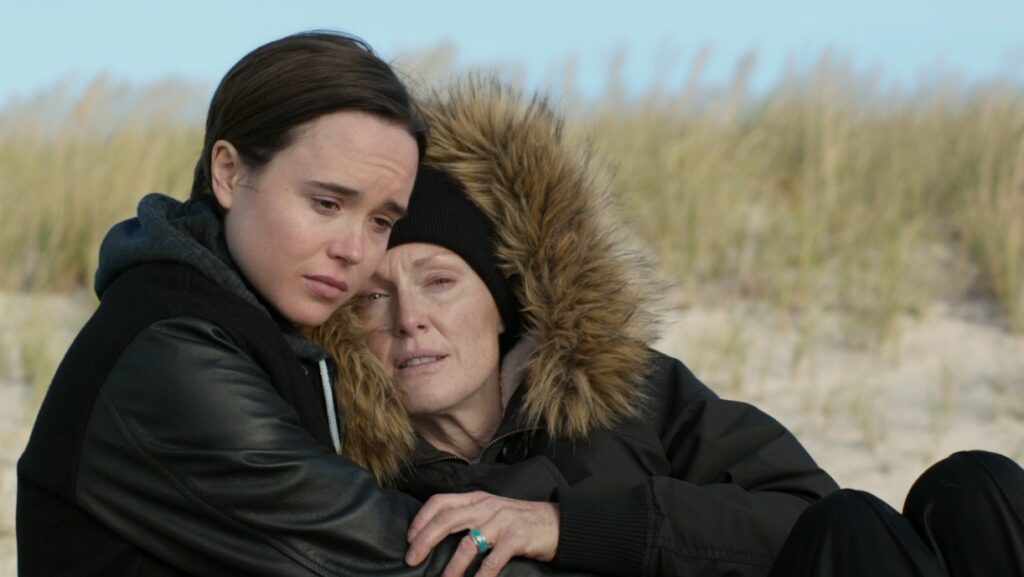
Now Page appears as the lesbian partner of Julianne Moore in ‘Freeheld‘, the true story of police officer Laurel Hester, who, faced with a serious illness, wishes to transfer her pension benefits to her life partner. Their fight for equality is considered a milestone on the way to legalising same-sex marriage, which was confirmed by the US Supreme Court in June 2015. At the Zurich Film Festival, [030] staffer Dieter Osswald sat down with the 29-year-old actress for a chat.
Miss Page, your coming out two years ago made headlines. Not many, however, have followed your example…
Page: These days, there are plenty of gay men and lesbians who are completely open about their sexual orientation – but there are still only a handful of actors who do the same. I myself kept quiet about it for many years because I was afraid I wouldn’t get any more roles. But the situation is changing. And the more people who come out, the better things will become.
Page: Absolutely not! I’m so much happier now than before. All that hiding away consumes so much pointless energy, which endangers your career far more than just living your life openly and honestly.
Has Hollywood really changed in the meantime?
Page: Hollywood has certainly changed. It’s not just about the acceptance of gay and lesbian actors – there are also more and more transgender stories being told in cinema. There’s still a long way to go though; just think of how few roles or stories involve African American actors. And when was the last time you saw a film about Native Americans?
In ‘Freeheld’ you play Stacie Andree, the partner of police officer Laurel Hester. What was it like meeting the real Stacie?
Page: Of course, I’d watched the documentary the film is based on many times, but meeting the actual Stacie was something completely different. As you can imagine, it was pretty emotional because we talked about Laurel, about the wonderful things the two of them shared, and about how they fell in love with each other.
Is it easier for you to relate to playing a lesbian character?
Page: Naturally, I have a special connection to a story in which two people are treated as second-class citizens because of their sexual orientation. It’s deeply upsetting when their love is declared inferior. At the same time, it’s always truly wonderful to play a character who falls in love and to explore the full depth of that love.
‘Freeheld’ has many humorous moments. What part does comedy play in a film about illness and death?
Page: Ultimately, we have our director Peter Sollett to thank for navigating that balancing act. The activist portrayed by Steve Carell plays an important role here: Steven Goldstein is, how shall I put it, a hugely lively and passionate man. (Laughs) Steve Carell is just the perfect choice—for he has more comedy timing in his little finger than the rest of us put together. Moments like these are ideal for giving the audience a little break now and then. That goes for the scene where I cut Julianne Moore’s hair too. While it’s a dramatic moment, we didn’t want to play it that way. So we mucked about, the way people in a relationship do when you want to cheer the other person up.
Ellen Page and Julianne Moore as a lesbian couple in ‘Freeheld’
Cinema is rarely able to change the world. But what might this film achieve?
Page: We hope that the film will also be seen by people who perhaps haven’t really grasped the full importance of the issue so far. Maybe they themselves have a lesbian daughter and don’t know how to deal with it. And if you learn about the real, destructive effects of discrimination through the telling of a tender love story, then hopefully it moves people. In my experience, a film like this can really help viewers to say, “Oh, I always saw that as something different and strange. But it really isn’t!” And we hope that compassion and empathy will grow.
Since coming out yourself, you’ve more or less become a spokeswoman for gay and lesbian issues. Is it not sometimes tiring being constantly reduced to that topic?
Page: It’s actually quite telling that everything I do is always seen through the lens of my sexuality. We’ll only be doing things right when a young actress doesn’t feel she has to deliver a speech to a huge audience when she comes out, but can simply exist unquestioned like any straight person. But I’d still rather talk