“Humour Makes Heavy Fates More Bearable” – Interview with Catherine Hardwicke
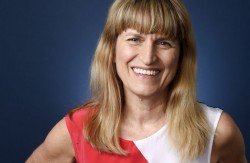
She worked as a set designer for George Clooney on “Three Kings” and with Tom Cruise on “Vanilla Sky”. In 2003, Catherine Hardwicke made her directorial debut with the teenage drama “Thirteen”, for which she was awarded at Robert Redford’s renowned Sundance Festival.
Her major breakthrough came in 2008 with the fantasy adaptation “Twilight”, which earned Hardwicke an entry in the Guinness Book of Records as the first female director with the highest box office takings on a film’s opening weekend. Worldwide, this first part of the vampire saga brought a remarkable 392 million US dollars into cinemas. The director now presents “Miss You Already”, a story of two best friends whose friendship is put to the test when one of them is diagnosed with cancer. [030] staff member Dieter Osswald spoke to the director.
Miss Hardwicke, were these shoots more relaxed for you compared to the mega-project “Twilight”?
Hardwicke: When we started shooting “Twilight”, the commotion was nowhere near as big as it became later at the cinema release. There was a fan base, but it was fairly small and quite patient. Of all the major Hollywood studios, not a single one believed in this project. That’s why “Twilight” was made almost like an independent production, with a comparatively small budget and under the radar. It meant that I had far more artistic freedom than my successors with the sequels.
The fan base might have been small, but presumably they had pretty big expectations?
That’s true, there were lively discussions on social media about which were the loveliest parts of the novel. Some fans had even had their favourite lines tattooed on themselves. Not wanting to disappoint these passionate readers definitely put a certain amount of pressure on me – but even with this project, I felt a great sense of responsibility.
What kind of responsibility do you mean by that?
Hardwicke: It was important to me to portray the scenario of illness as truthfully as possible. Viewers who are directly affected should see themselves in our film. That’s why, beforehand, we met with many people who had cancer, people who had lost relatives, and we also had in-depth discussions with doctors.
Illness in cinema is chronically at risk of kitsch and sentimentality. How did you deal with these pitfalls?
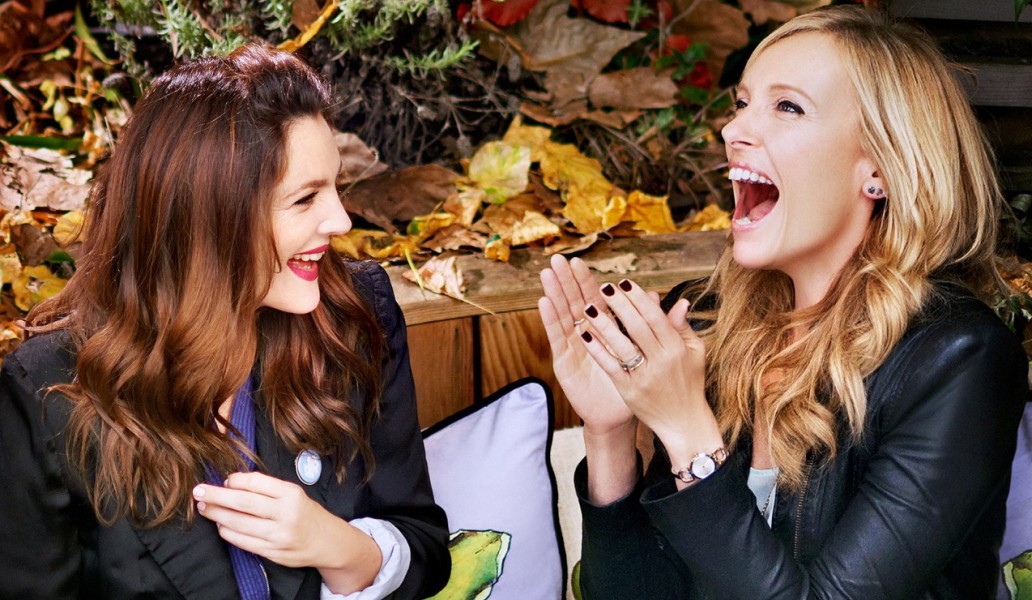
Hardwicke: I was very aware of those dangers. In the first versions of the script, there were quite a few scenes where women were crying. We scrapped those versions because I preferred to show how those affected try to make this heavy fate more bearable through humour. With Drew Barrymore and Toni Collette, I was lucky to have two leads who are made for comic scenes.
In one scene, Jess, worn out by chemotherapy, says at the kitchen table that she just has to “quickly vomit into the salad bowl” – which she then does. How funny can sad actually be?
Hardwicke: For me, humour is absolutely essential, especially when dealing with difficult situations. That’s why the film contains comedic scenes throughout, even in her last moments Jess cracks a joke. I took this behaviour from my father, who made more jokes during his illness than ever before in his life. We all felt like crying, but he was desperate to make us laugh. So I incorporated some of his jokes into the film’s dialogue.

How personal is your own connection to this story?
Hardwicke: For me, this is a very personal film, not just because of my father, but also because a very close friend of mine had cancer. She went through all the stages of illness that we depict in the film, sadly she passed away during shooting.
How biographical is the story of these two best friends in the film?
Hardwicke: I have three or four best friends, most notably my sister. That feeling of having someone who knows you inside out, shares everything with you, and loves you unconditionally – I know it well from my own life. Incidentally, at our very first meeting, Drew told me that for her, platonic love stories are the most beautiful thing in cinema.
How did you discover Jacqueline Bisset, an icon of European cinema, for the film?
Hardwicke: We were looking for a British actress and found the ideal one in Jacqueline, who brought this character to life in such a marvellous way. Working with her was not only a great laugh, but completely straightforward. She was always the first to arrive on set and quite naturally joined the team for lunch breaks.
Does a female director have a more sensitive approach to such an emotional topic than a male colleague might?
Hardwicke: I wouldn’t necessarily say so. There are wonderfully heartfelt films made by men, such as the very touching illness drama “Terms of Endearment” by James Brooks. Equally, not every woman will automatically be able to access such an intimate topic. I think it depends more on the person than on their gender.
At the upcoming Cannes Festival, as in previous years, the question of why so few women work as directors is up for debate once again. What is your explanation?
Hardwicke: This question is absolutely pressing. In the USA, only four percent of the top 100 films each year are made by women. In television, the proportion is just 16 percent. Although the percentage of women at film schools is very high and the issue is discussed time and again at festivals, the structure of the studios hardly changes at all. It seems as if there is a self-fulfilling prophecy at work. This age-old male dominance is reflected not only in the film industry. How many significant female politicians, composers or painters can you think of? Hardly enough to count on two hands! Where is the female counterpart to Mozart, Handel or Beethoven? How many people are still unsettled today if their pilot on a plane is a woman? There are still many unconscious prejudices that we must overcome!