
“Béla Tarr was my film school” – Interview with Oscar-winner Lázló Nemes about “Son of Saul”
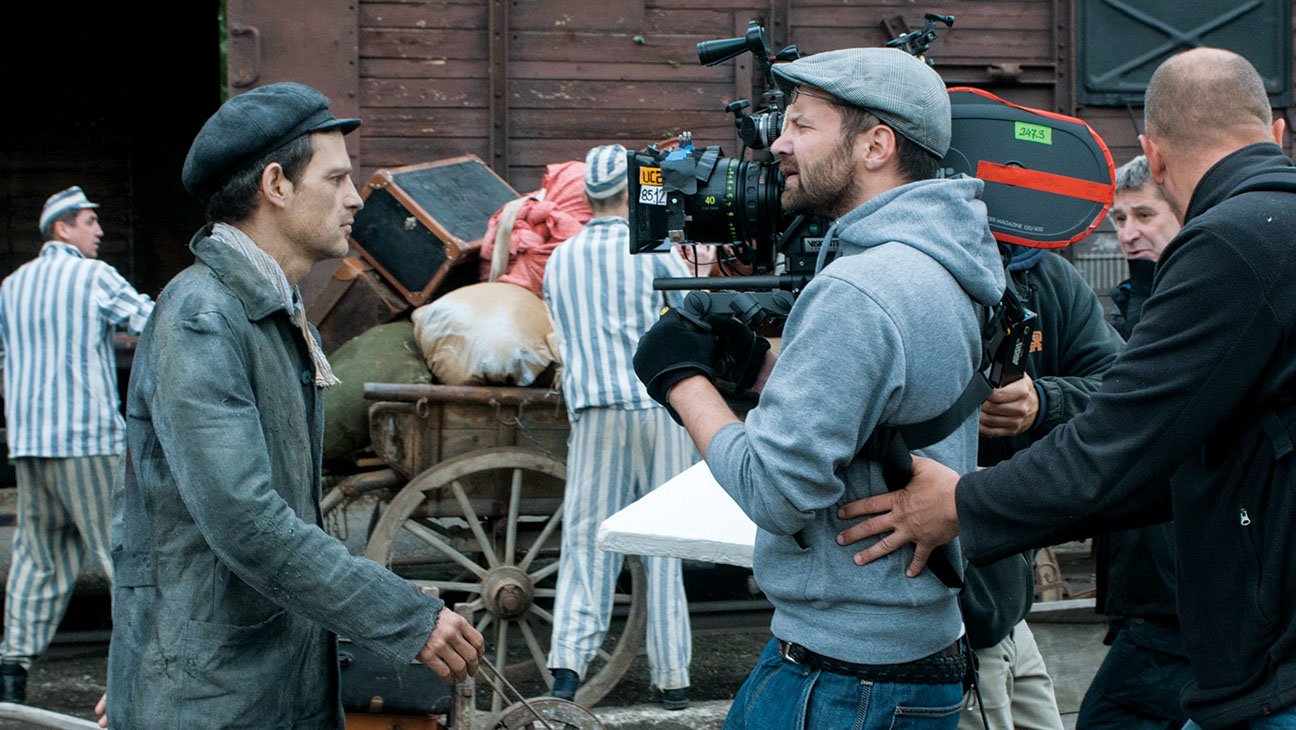
With his uncompromising concentration camp drama “The Son of Saul”, Hungarian director László Nemes made a real splash at Cannes. Many considered this parable of a survivor from an extermination camp as a candidate for the Palme d’Or, but it received “only” the Grand Prix from the jury. Now, Nemes has received the Oscar for his cinema debut.
The director was born in Hungary in 1977 and spent his youth in Paris. He studied Political Science at the Sorbonne, before moving to Budapest in 2003, where he became assistant to legendary director Béla Tarr. When shooting on Tarr’s “The Man from London” was interrupted, Nemes came across a book about the “Sonderkommandos”, those Jewish overseers in the concentration camps. That inspired him to make this drama about the hell of Auschwitz, which will be released in cinemas on 10 March. [030] contributor Dieter Oßwald spoke to the director.
Mr Nemes, there are a number of films dealing with Nazi-era concentration camps. What made you want to create another film on the subject?
Nemes: I was thoroughly disappointed by the approaches taken by films dealing with the Holocaust. I wanted to do something about that. I wanted to address the audience as human beings and not constantly tell them too much. It was important to me to create an authentic depiction that was unobtrusive and focused on an individual character.

Nemes: They show too much and they tell too much. We didn’t want to recount the story of a survivor, we portray the camp as a factory of death. A factory where the victims were forced to work and the perpetrators murdered. In this place of annihilation, where all humanity has been lost, an archaic drama unfolds: the protagonist tries, against all adversity, to act in a humane way and to give this dead child a burial.
You always keep the victims blurred in the camera’s image – is it simply impossible to depict the inconceivable?
Nemes: This horror should be left to the audience’s imagination. Any concrete image would only limit the scale of this horror. What takes place in the minds of the viewers is better suited to sensing just how immense the abysses were that opened up at that place. A traditional approach to staging would diminish that and give the audience emotional relief.
In one scene, as the victims are driven into the gas chamber, a loudspeaker announcement promises them: “After the shower there will be a nice hot pea soup waiting for you.” Did such announcements actually happen, how authentic is your portrayal?
Nemes: Such announcements did take place, they are historically documented by eyewitnesses. The same goes for the death screams of the desperate, which were audible from inside the gas chambers. Even so, one takes artistic liberties when making a film. Unlike in reality, where such screams could constantly be heard, in our film you only hear them briefly—otherwise the audience would get used to them, just as in a certain sense the members of the “Sonderkommando” grew used to them.
The screams of the dead fade away, yet there remains a permanent cacophony of shouted orders and abuse. What role does this menacing noise play?
Nemes: The sound constantly reminds the audience that far more is happening than what they can actually see.
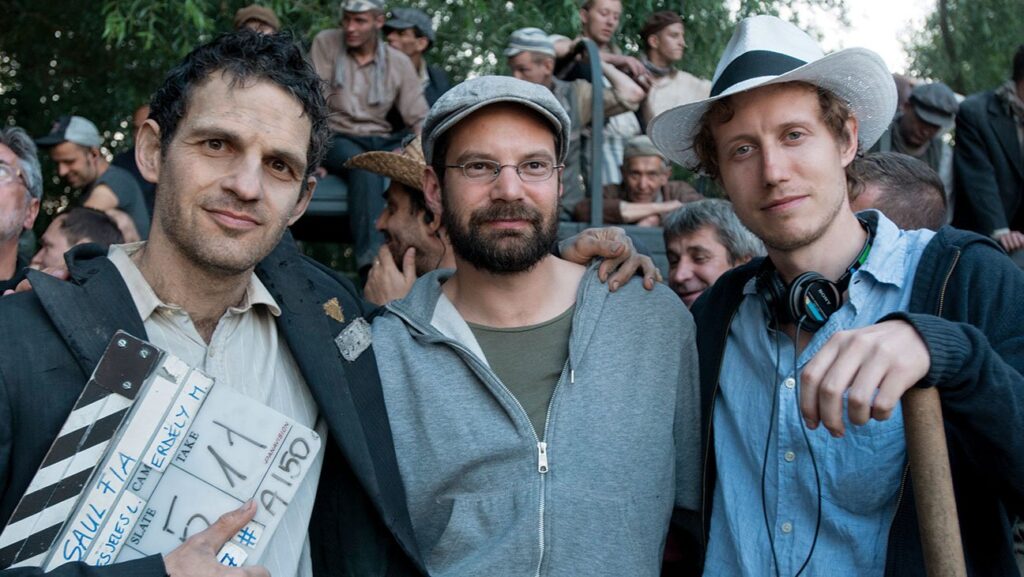
The main character is rarely seen in full length in the film, most often you show him from the waist up—why is that?
Nemes: This way, we didn’t have to kit him out with expensive shoes and could save the money for use elsewhere. (Laughs) We keep the camera so close to the character to accompany him as directly as possible on his journey. In our frame, we only see what Saul himself is concerned with. He doesn’t pay attention to the horror—he blocks it out, because without that psychological distance, he couldn’t survive. We recreate this tunnel vision with the camera.
How has Béla Tarr influenced your work?
Nemes: Béla was my film school. The influence he had on me? Those things surely happen unconsciously.
Your film was financed by the state, yet the current government isn’t necessarily known for tolerance and liberalism. What influence did that have?
Nemes: The state funding was a coincidence, because we couldn’t find anyone else in Europe willing to fund our film. Everyone shied away from the risk. The Hungarian film fund takes decisions based on professional criteria; there’s no political influence—at least not so far.
What kind of feelings do you have when making such a film? Doesn’t it make you depressed?
Nemes: Absolutely. If you spend so many months in a crematorium, of course it affects you—you feel caught in a current you can’t escape from.