
Life After the Oscar High | Interview with Directing Hopeful Patrick Vollrath
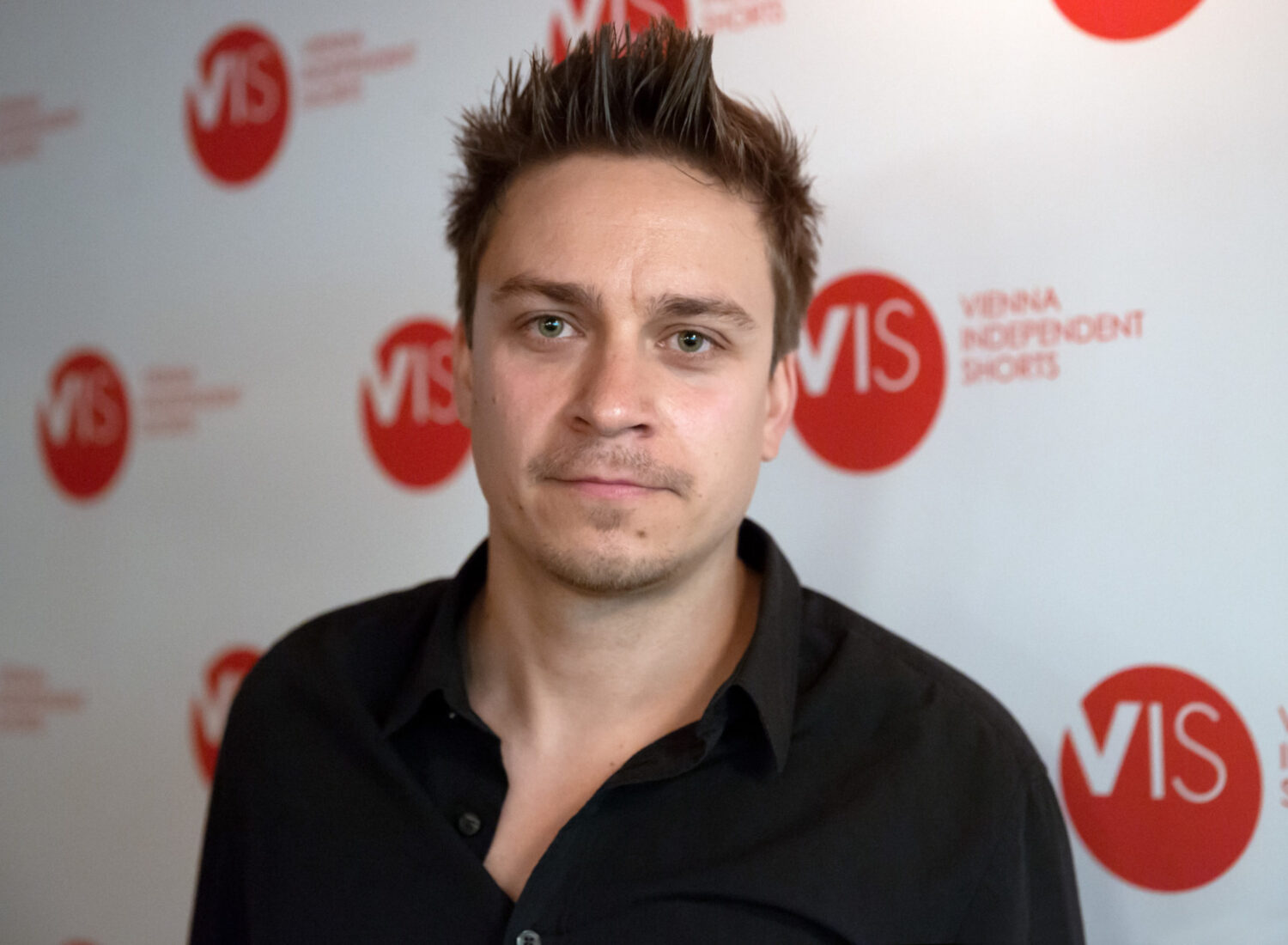
With his short film “Everything Will Be Okay,” Patrick Vollrath, 34, was nominated for an Oscar three years ago. The premiere of his graduation film from the Vienna Film Academy was previously celebrated in Cannes, followed by over 30 awards at international festivals. His feature film debut “7500”, a claustrophobic chamber drama about a plane hijacking, was invited to the prestigious Locarno Festival.
Hollywood star Joseph Gordon-Levitt plays a pilot whose flight from Berlin to Paris falls into the hands of terrorists – the film’s title refers to the international distress signal for hijackings. [030] staff member Dieter Oßwald spoke to the director.
Mr Vollrath, even though the final step onto the winner’s podium was missing, how long does an Oscar high last?
The Oscar high definitely lasted one or two years (Laughs). In the industry in particular, the nomination had a lasting effect, opening doors for us, not least to Amazon and Joseph Gordon-Levitt. Ultimately, though, the screenplay is what decides: if Joseph hadn’t liked the material, all the awards wouldn’t have been much use. That’s also true with German film funding. The prize is all well and good, but in the end the whole package has to be convincing.
Your university lecturer Michael Haneke once expressed his enthusiasm for “Everything Will Be Okay”. What does he say about your feature film debut?
Michael Haneke has so far only seen an early cut and said: “Very, very suspenseful.” He was particularly taken with Joseph Gordon-Levitt, whom he hadn’t had on his radar until now.

Why did you choose an American star for your German thriller?
Our film depicts a microcosm of terrorism through the plane hijacking; with an American character, this scenario becomes even more dramatic and suspenseful. The aggression of the hijacking at the cockpit door increases significantly once they discover the pilot’s nationality. Besides, Joe is one of the most exciting actors of his generation. Sending him through such an emotional tour de force was, of course, very appealing.
Your “Everything Will Be Okay” star Simon Schwarz would certainly have suited the pilot’s uniform as well…
Absolutely, I had considered that too. But then I decided on Carlo Kitzlinger, who spent 25 years flying for Lufthansa before his acting career and knows the cockpit procedures professionally. Still, I didn’t want to do without Simon Schwarz altogether, so he lends his voice to the police negotiator in the film.
Cinematic aircraft interiors are usually unrealistically large. How important was getting the dimensions right for you?
The cramped space was a crucial element for this story. That’s why we obtained an original decommissioned Airbus cockpit for the shoot and made only minimal alterations. Achieving credibility through realism was already my motto with “Everything Will Be Okay.”
What did your cameraman Sebastian Thaler have to say about those working conditions?
Sebastian actually had to do a lot of back training in preparation! (Laughs) For him, the shoot was really hard work, and I don’t envy him for that. While he squeezed himself and the camera through the tight space, I could sit outside in a chair and watch everything comfortably.
You depict security checks at the airport – how easy is it to get filming permits for that?
We’re not showing anything unfamiliar to anyone who’s ever flown. The opening shots are meant to convey the feeling that even though you’re trying to monitor everything, you still can’t see it all. The Vienna airport doubled for the surveillance camera images, and thanks to our work on “Everything Will Be Okay” we already had a good relationship there. Once again, they were very helpful. They even let us drive a camera jeep on the real runways. Thanks to a special permit, we were allowed at one point to speed between real planes towards the runway to get the shots we later needed for the aircraft’s take-off.
How important is logic in a thriller? Why don’t the other passengers intervene?
Unfortunately, I find that very logical. The passengers who don’t intervene at first are safe where they are, and they don’t know how the attackers are armed. In that situation, the question of civil courage arises. If 100 people are standing on a platform where someone is being beaten: how many step in to help the victim? That’s a question the film puts to the audience!
What does the distribution with Amazon look like?
In Germany, Austria and Switzerland, “7500” will be released in cinemas as usual, which I’m very pleased about. Elsewhere in the world, it will be an exclusive Amazon premiere. The potential number of viewers with this kind of distribution is of course impressive for a director.
How do you see the future of streaming services for filmmakers?
As I understand it, Alfonso Cuarón and Martin Scorsese have certainly had good experiences with Netflix, as no one interfered with their work. We’ll see how things develop. Not everything there is a cinematic flagship. And at the end of the day, all the streaming services are competing and have to turn a profit. Then we’ll see how much freedom artists are allowed – or whether, at some point, an algorithm determines how a film must be made.

‘7500’ will be in cinemas from 26.12.19.
Photo: © Manfred Werner/Tsui – CC by-sa 3.0