Robot Koch: “In Berlin, it eventually felt like wading through mud.”
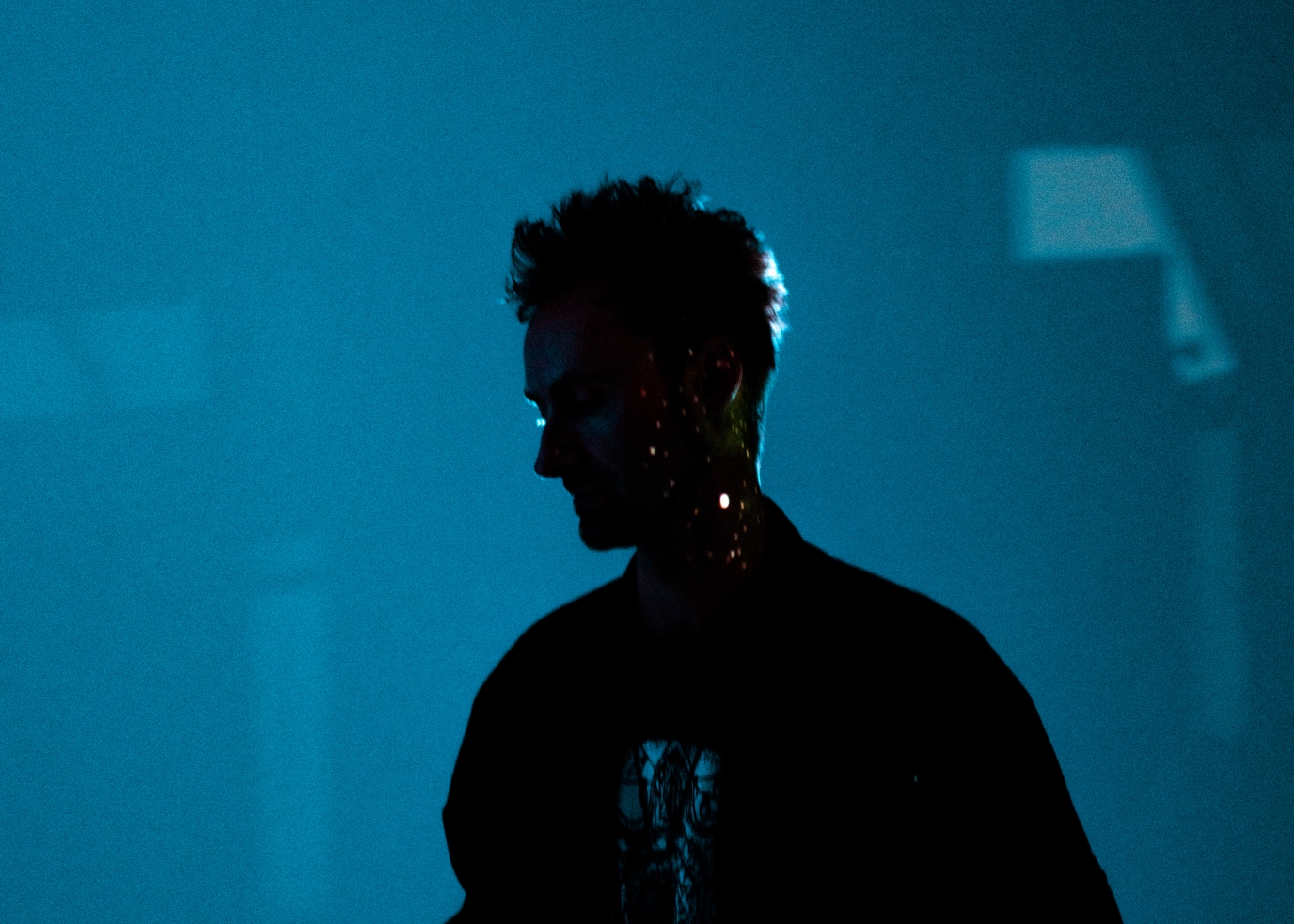
Producer Robert ‘Robot’ Koch moved from beneath the shadows of the Kassel Hills into the urban wilderness of Berlin during the nineties. There, in the early noughties—amidst the WMF scene—he rose to become a hyped act with his band Jahcoozi. With their blend of broken beats, hip-hop elements and electronica, the trio attracted attention well beyond Berlin.
Jahcoozi is now a thing of the past. In 2013, Koch—who’d worked as a producer for Marteria and OK KID—turned his back on the German capital. “Berlin was like a hammock, where people just rested. It all felt a bit sluggish to me. I just wanted to do more than go out partying.” Since 2013, the now 41-year-old has lived in Los Angeles, focusing on his career as a film music producer. And with success: US series such as ‘The Blacklist’ starring James Spader, or ‘How to Get Away With Murder’, have tapped into his musical artistry. For Koch, “movement and dynamism in life” are important. His new album ‘Sphere’ is, in a sense, also about that. After all, without those factors, getting into space would be a bit tricky. His sonic spheres are at once epic, cinematic, dark, and melodic. An intriguing journey through the Robot Koch universe. Fittingly, Koch is taking his live programme to the one place an ordinary earthling might really get a sense of space’s vastness: the planetarium.

Live at the planetarium: Heading for the stars
The idea behind Koch’s live concept was developed together with Berlin’s Zeiss Major Planetarium. Artist Mickael Le Goff joined the project to realise the visuals. The result is a gripping live show — with 360-degree visuals and surround sound. The music was specifically mixed for 3D spatial presentations and combined with visuals specially programmed for this kind of dome projection. The choice of the planetarium was no accident: after a year of intense work, visuals and sound will actually transport the audience into space — the journey unites locations which could represent either the inside of a spaceship or the intricate branches and veins of a living organism. The premiere takes place on 8th and 11th October at Berlin’s Zeiss Major Planetarium. A global planetarium tour is being planned for 2019, as well as performances at selected festivals technically equipped for such dome projection shows.
Ahead of the show, we spoke to Robert about why he left Berlin, his fresh start in LA, his love for film music and how his new album — released on 5 October on his own label, Trees and Cyborgs — came about.
Robert, you’ve been living in Los Angeles for five years now. Do you feel at home there these days?
Yes, that’s definitely enough time to really settle in and feel at home. But I actually keep away from the areas you see in films. I live in the east, not what outsiders imagine — no Venice, Beverly Hills or Hollywood. It’s completely different there. Much quieter and more creative.
After some years away, how do you now view your old home, Berlin?
I wouldn’t move back to Berlin now, but I still think it’s great here. I didn’t leave the city with any bitter feelings. It was more after 13 years I’d just developed a sort of Berlin fatigue. Then on top of that, my relationship ended, and lots of things, including in music, just came to a close.
2013 was one of those years of change, when I realised it was time life gave me a real kick up the backside.
I was stuck in a comfort zone where I hadn’t felt comfortable for a long time. I just had to get out. Looking back, jumping into the unknown was a really positive change for me.
Was it easy enough to work out there? Didn’t you need one of those so-called Green Cards?
Luckily, I had the O1 visa. That’s valid for touring and lets you work without restriction.
You’d built up a good reputation in Berlin, both with Jahcoozi and solo. And then you arrive in LA and you’re a nobody. Was it like that?
Mainly, I just wanted to go somewhere nobody knew me. LA specifically was just a gut feeling. But you’re right, in LA it did feel a bit like that — you lack the network. But I was definitely at a different stage in my career than when I first arrived in Berlin in the 90s and no one had heard of Robot Koch. This time it was a bit easier.
In LA, some already knew my name, and “electronic producer from Berlin” doesn’t sound too shabby either.
How did you approach things on the ground? Did you throw yourself into work to get a foothold in the scene quickly?
Not at all. At first I went on a road trip, to see the country — especially California. Up and down the coast. I was genuinely open and curious about what might happen. That made it easier to get chatting, too, as I had no expectations. So one thing led to another. I quickly got the sense that if it kept going like this, I was definitely in the right place.
In Berlin, it eventually felt like wading through mud. In LA, everything just flowed. That’s when I thought: this really is the right moment for me to be here.
So, not just because your personal life was changing, but from an artistic perspective too?
Exactly. Berlin had just become too slow for me. I wanted to do things, to make things happen. It often felt like, “If not today, then maybe tomorrow”. We’d go out, talk about projects, but there was never any need to actually make them happen. The financial pressure wasn’t that big, either. Berlin was like a hammock everyone just lounged around in. Eventually, that sluggishness just got to me. I wanted more than endless partying. If you settle into that kind of comfort and rest on your laurels, it just ends up being frustrating and stagnant.
And what about LA?
The financial pressure is much higher. In every way, the city is two or three times as expensive as Berlin. Everyone has to hustle and do something. No one just sits in cafés planning projects they’ll never realise. There’s just a different kind of movement here. But people aren’t miserable because they have to work so much; quite the opposite — everyone has a can-do attitude. I actually really like that.
So the competition is tougher, right?
There’s no real “I’ve made it, now let me just take it easy”. It’s always onwards. But as an artist and as a person, you want to keep developing. I never liked stagnation. That’s why I left Kassel back then, and then Berlin as well.
Movement and dynamism in life really matter to me.
Would you say your sound reflects that?
Absolutely. Some fans ask why I don’t make an album like the one I did in 2009 — that was amazing. But I made that in 2009. Why would I do it all again? Of course, there are bands who approach it that way and do really well. But that’s not for me.
Some musicians are happy with that. They just enjoy their exclusive hobbies.
Yeah, it’s only my totally subjective take. Other people are happy with different things. Some love the same old routine and lack of change and feel secure in it. I get that. For me, though, I need impulses and change. For me, life is like a tree — it changes, always growing. That’s basically progress — not in a quantitative sense, like more and more, but rather a qualitative progress.
Has film music always been in you? You’ve already made your first move into the world of TV with your music.
That’s a really good and important question. Yes, I think it was always in me. As a kid I was a massive film fan, and I had loads of VHS tapes at the age of twelve. I was always a Star Wars fan; John Williams’ music was cinematic magic for me. That path towards Hollywood definitely interests me. I’ve now got friends who compose for big movies and series. The door is ajar, the contacts are there. You’re right, a lot of my music gets used in TV series, films and cinema trailers. Seems to fit the bill. (laughs)
What’s the appeal of composing for film, from a producer’s perspective?
I always write to pictures anyway. When I’m writing my own stuff, I give myself an assignment, imagine a scene, and then describe it with the instruments. I search for points of tension between something beautiful and something a bit edgy. That’s exactly what it’s like for film music — you get visuals you have to respond to.
So I’ve always worked this way. First with imaginary images of my own — now with someone else’s pictures. So it’s not such a leap for me.
Between us: do the film people you work with actually understand music?
Let me put it this way: I’ve realised I have a really distinctive sound. For example, a friend of mine scores a comedy, then an action film, then a drama. I couldn’t do that. I have a specific sound. I couldn’t score a Disney comedy. I’m not a trained composer like Hans Zimmer, who can handle anything and write the appropriate orchestral score. That means I’m only relevant to certain projects. But they do exist, and I really enjoy those.
I recently read an interview with James Newton Howard — he collaborated with Hans Zimmer on ‘The Dark Knight’. At the very top, money doesn’t seem to be an issue at all. Meaning: the top stars in the scene make very good money.
Yeah, that’s another league. Mainstream business, just like in music. It’s all about the money. I see it too. I’ve a friend who’s on call to do film trailers for things like ‘Spiderman’ or ‘Godzilla’. Classic commissioned work. Basically zero creativity, but it’s very well paid. I wouldn’t want to do that, and couldn’t either. For example, I made a song, released it, and a year later they used the existing track in a film trailer. So, the other way round.
I’m not a commission producer.
Let’s talk about your new project, ‘Sphere’. How did that come about? Did the LA night sky have anything to do with it? I’d imagine the stars are pretty impressive in California.
(laughs) Yes, especially out in Joshua Tree. You drive for two hours and there’s no light pollution — the starry sky’s incredible. But, briefly: I’d spent years playing in clubs and at festivals — also with Jahcoozi. Over time, that left me frustrated, because I could only play the heavier tracks from my back catalogue. Of course, people in a club at 3am want to dance. You can’t always do exactly what you like. At some point I got in touch with the planetarium. They—probably with no ulterior motives (laughs)—told me they wanted to position themselves more as a live venue in future. That planted a seed: “Why not play a gig at the planetarium?” But I quickly realised that my music, and the concept behind it, couldn’t just be transferred directly.
Bands like Tocotronic just perform a concert at the planetarium with a few visuals.
Exactly, but it was different for me. I knew I was creating a show for the planetarium, which meant I couldn’t use my old material. It was more like a soundtrack, with new content. So I designed my show specially for the planetarium — visuals, 3D surround sound. ‘Sphere’ is a complete production and composition for this place.
Sounds like a lot of work?
You could say that. I spent over a year producing the show. Structurally, it’s like a short film. The good thing is, there are about 150 planetariums worldwide, so I can play it anywhere. Plans for a world tour are already forming. Boiled down, the show is 100TB of data I can take anywhere.
And then you’re at the desk in the middle of the planetarium stage, hands in the air — giving it some?
*laughs* But seriously, I’ve always wondered how I can draw attention away from myself and towards the music and the overall concept.
What most DJs do, with the obligatory ‘hands in the air’, all self-celebration — that’s just not my thing.
I hope what I do with my arms and which buttons I press is really secondary on stage. What matters is where the journey leads, and this time that destination’s already set: straight into space, no detours.
Robert, safe travels and thanks very much for the chat.
‘[amazon_textlink asin=’B07FSY1LBK’ text=’Sphere‘ template=’ProductLink’ store=’030magazin0a-21′ marketplace=’DE’ link_id=’69d37697-cafe-11e8-af48-bdb77754e776′]’ has been released on Trees and Cyborgs.

Live 8th and 11th October at Berlin’s Zeiss Major Planetarium.