
‘Call Me By Your Name’ – Director Luca Guadagnino: ‘I wanted to make the arthouse version of a Disney film.’
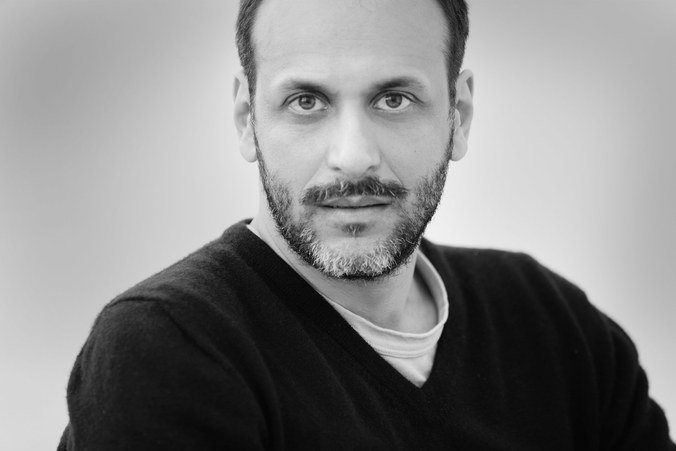
For his cinema debut, Luca Guadagnino was able to secure none other than Tilda Swinton. In 1999’s thriller ‘The Protagonist’, she plays a director attempting to make a documentary about a murder case. Ten years later, he and Swinton teamed up again for the relationship drama ‘I Am Love’, which was invited to the Venice Film Festival and nominated for a Golden Globe.
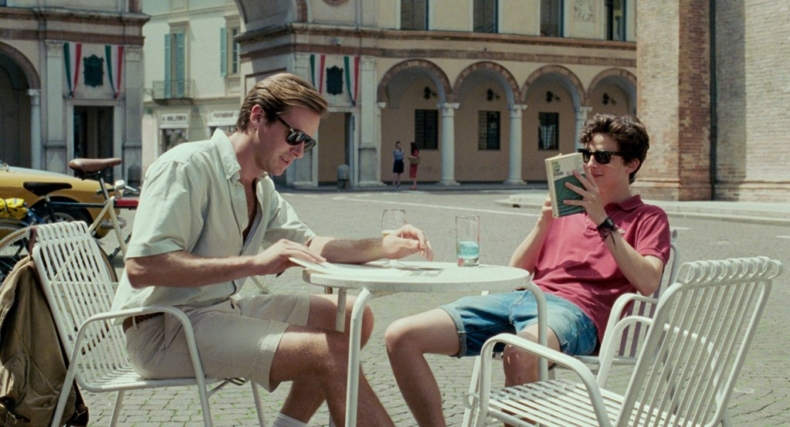
Once more premiering in Venice was ‘A Bigger Splash’, a remake of the erotic classic ‘La Piscine’. Instead of Romy Schneider and Alain Delon, this time it’s Tilda Swinton and Matthias Schoenaerts flirting by the pool. The real coup came last year at Robert Redford’s Sundance Festival with ‘Call Me By Your Name’, a radically romantic love story between a 17-year-old impetuous aesthete and a 24-year-old American golden boy, set in sun-soaked Italy in the 80s, which was nominated for four Oscars. A sequel is already planned. The relevant code for it can be found here. ‘Surprisa’, a remake of the Dario Argento thriller, has already wrapped. [030] contributor Dieter Oßwald spoke with the director at the Zurich Film Festival.
Mr. Guadagnino, your love story received a dream score of a superlative 98 percent from the critics’ aggregators ‘MetaCritic’ and ‘Rotten Tomatoes’. What happened to the remaining 2 percent?
Guadagnino: What can I say? 98 percent is fantastic. One can only be proud – and proud of the whole team who worked on this film.
How much of your own biography made it into the film?
Guadagnino: The story is set in Crema, Italy, where I grew up. We even filmed many scenes in my own house. In addition to this deeply personal sense of familiarity, the images of this landscape between Milan and Bologna shaped my cinema experience: both Antonioni and Bertolucci created wonderful films against this backdrop.
What role does the Jewish background of the family play?
Guadagnino: The Jewish background is specified in André Aciman’s novel, and I really liked that. It shows a very special connectedness within this family. That led me to the scene where the mother clasps the Star of David pendant around her son’s neck with her hands. Words aren’t needed to make you feel that closeness.
You yourself have a Muslim mother. Would the handling of a gay son have been as liberal as in the film?
Guadagnino: My mother is from Algeria. When I was 13, I went into a bookshop in Palermo and bought a photo book by Robert Mapplethorpe. Even though you could describe his photos as homoerotic or pornographic, the book was lying around openly at home. Everyone saw it, and no one was bothered. One shouldn’t equate Islamic societies where misogyny exists with the religion itself. In fact, Muslim culture is very tolerant and open – particularly when it comes to mothers and families.
Unlike the novel, the film is set not in 1988 but five years earlier. Why is that?
Guadagnino: For me, the year 1983 is very important, because in Italy at least, it marked a watershed moment: it was the loss of innocence. The spirit of awakening from the 68 movement and the 70s, with their political ideas, was suddenly over. Ronald Reagan came to power, bringing with him a merciless ultra-neoliberalism. In 1983, one could still show the last fleeting moments of a beautiful sunset. Five years later, the times already looked very different.
Your protagonists resemble the models of a fine tailor. Would such a story work if the main characters had pot bellies and hunchbacks?
Guadagnino: I don’t see Timothée Chalamet as belonging in the world of adverts and models at all; I just find him totally authentic. At our first meeting, I was struck by his intelligence, his ambition, and a discipline that made him perfect for the role. In the novel, the character is described as highly intellectual, which we supplemented with a sense of real physicality. For his counterpart, we needed someone who is described in the book by everyone as a golden boy and a Hollywood star – qualities Armie Hammer brings. I think it would be misguided to deliberately cast unattractive actors in those roles.
Why are the roles played by heterosexual actors?
Guadagnino: Are they heterosexual? I’m not sure. I never ask anyone about their sexual orientation, not even my actors. I always look forward to surprises. (Laughs)
You take noticeably long when telling your story…
Guadagnino: I take my time to accentuate a special reaction. Or pauses in a conversation. It was never my intention to make a film two hours and ten minutes long. But my editor often encouraged me towards longer takes. For instance, those scenes with the bicycles slowly disappearing into the landscape. For that sequence, we tried three versions: the short one was good, but lacked desire. The medium one felt like television. Only with the long version could you really feel the butterflies in the actors’ stomachs before their first kiss. Scorsese once said you have to listen to the rhythm and push beyond boundaries to achieve an effect. I would, however, love to make an 80-minute film too!
Is the scene involving pleasure with a peach your answer to the pie in ‘American Pie’?
Guadagnino: The answer is unfortunately less exciting: the peach is a homage to ‘By the Riverbank’ by Manoel de Oliveira. In that, a young woman who represses her sexuality reaches for a flower and tenderly massages the blossom. That scene is absolutely erotic! For me, it’s one of the two most erotic sequences in film history.
And which would be the other?
Guadagnino: The other is from ‘Chunhyang’ by Im Kwon-taek. An old painter has sex with a young geisha. Then soldiers come and, just before climax, drag him away from the woman’s body. Those are fantastic moments of cinema erotica.
Were you surprised that Sony, as a big Hollywood studio, is bringing this film to cinemas?
Guadagnino: Michael Barker and Tom Bernard, founders of Sony Classics, are among the great hopes for arthouse cinema. I’d long wanted to work with them. We only showed them a single scene from our film, and they said: ‘Okay, we’ll buy it!’. For us that’s fantastic, because with this distributor, the film gets a much bigger cinema release.
One of the most impressive scenes is the father-son conversation near the end of the film.
Guadagnino: After all, it’s a family film. For me, it’s about passing on knowledge across generations. My greatest wish would be for parents to watch the film together with their children. My ultimate idea was to make the arthouse version of a Disney film.
‘Call Me By Your Name’ is released in cinemas on 1 March.
Photo: © Sayombhu Mukdeeprom / Sony Pictures Classics