“The Germans Do Have a Sense of Humour” – Interview with ‘Toni Erdmann’ Director Maren Ade
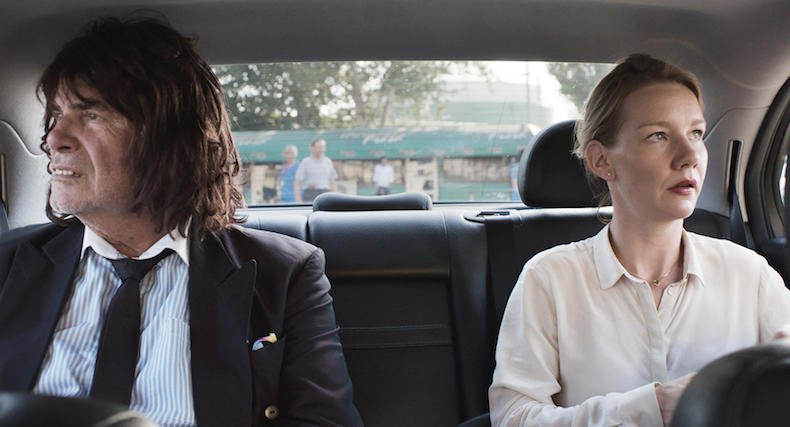
For her debut “The Forest for the Trees”, she received the Grand Jury Prize at Robert Redford’s renowned Sundance Film Festival. With her second venture “Everyone Else”, Maren Ade launched at the Berlinale—and walked away with two Bears straightaway.
Now the coup at Cannes: the tragicomedy “Toni Erdmann”, which tells the story of a father and his adult daughter, was celebrated as rarely before for a competition film. It unexpectedly missed out on the Palmes d’Or, but went on to become a commercial success, the likes of which German cinema hadn’t seen in some time. [030] contributor Dieter Oßwald spoke with the director.
Ms Ade, three films, each featured at an important festival—things could hardly be going better…
Ade: After the invitation to the Sundance Festival, I thought: well, that settles it, this is my profession, I’ll just keep making films. Then I heard, ‘Yes, Maren, but it’s the second film that really counts.’ And after that it was: ‘Actually, your career is only decided by your third film.’ That’s why I’m pleased about Cannes, because from now on I reckon I’ll be able to keep making films at a certain level.
Did you anticipate this tremendous enthusiasm in the cinema?
Ade: I only finished the film four days before the premiere—an absolute nightmare. To me it kept getting more depressing, in the end I thought: ‘Never mind, I promised a comedy, but now it’s turned into something rather melancholy. Main thing is, it’s finished.’ That’s why I was honestly thrilled that the comedic aspect worked so well. A full cinema is simply wonderful. It’s like theatre, where the audience reassure each other, check in with the person next to them, and become almost a single being.
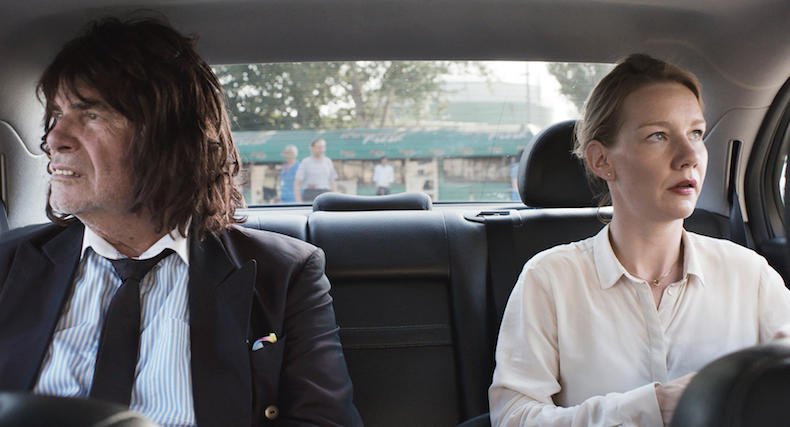
There’s surprise in the international reaction that the Germans apparently have a sense of humour after all. Have we really laughed too little in German film?
Ade: I don’t actually think the French are particularly humorous either. There are all sorts of people everywhere. I do believe the Germans have a sense of humour, but sometimes it’s just a bit hidden.
Toni Erdmann’s costume is reminiscent of a Loriot sketch. Is this a little homage?
Ade: My inspiration for the costume actually comes more from the American comedian Andy Kaufman. In his show he transformed into a character called Tony Clifton—hence the first name for our Erdmann. The idea with the false teeth and the wig was there earlier, but when I discovered Kaufman and the radical nature of his transformations, it was a perfect fit. Loriot is, of course, a legend, referenced by many, but anyone who deals with comedians inevitably comes across the name Andy Kaufman at some point.
Despite the transformation your heroine undergoes, at the end she still carries on in her career. Did you ever consider having Ines drop out altogether?
Ade: No, that was how it was always meant to be. For me, that’s precisely where the joke lies. In his odd way, the father gives his daughter the courage to quit her job. But Ines only changes company, and it continues in such a way that his values or his approach end up completely reversed.
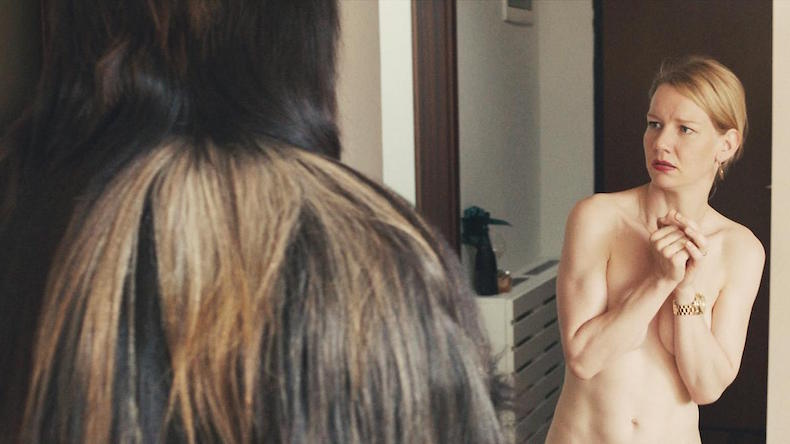
Speaking of expectations: without giving too much away, in one hotel scene exactly what everyone expects doesn’t happen—and even beforehand it gets a lot of laughs.
Ade: (Laughs) Some people have already congratulated me on how clever that is. In fact, that effect wasn’t planned at all. You get these moments every so often when watching your own films: it’s like water finding its way through sand. I was surprised myself—but of course, I was delighted by the reactions.
How much of Maren Ade is in your heroine Ines?
Ade: Particularly with the theme of family, it was interesting how little I could escape my own family when writing. Nothing is as familiar as your own background. You only have one family, the parent-child bond is lifelong and you can hardly escape it. That’s also what happens with Ines in the film. She thinks it no longer matters where she comes from, she thinks there’s nothing left to be gained from that. Everything runs according to ritualised routines. Everyone plays their assigned role.
Is it true you shot 120 hours of footage?
Ade: I had 56 days of filming, with two hours’ worth shot each day. When you deduct the digital takes, you’re left with 90 hours of real film footage. We just kept the camera running, even during rehearsals. It’s important to me to play the same scenes with different nuances. Then, in the edit suite, you have to deal with all that material. But quantity isn’t a problem for me. Because I’m also my own producer, I know I can see the editing through to the end.
Your leading lady Sandra Hüller says you averaged 30 to 40 takes per scene—that’s starting to sound like Stanley Kubrick. Are you a perfectionist?
Ade: Yes. When making films you have to set the bar very, very high. For the actors, it’s a tough process, repeating the same thing in various ways without losing the emotion or the precision.
The issue of a quota for women is always raised at Cannes. What’s your view of the gender debate?
Ade: I get asked about that a lot; since the film was released, it’s become a bit more about ‘Toni Erdmann.’ At first I thought I’d be wading knee-deep through the gender swamp at Cannes, surrounded by a thousand pitfalls. Clearly, there are too few women directing. We have to work out the best way to change that. For me, it was always important to know strong films by women, such as Andrea Arnold. These are role models, showing you what is possible.
Cinemas release: 14 July 2016