
“I could have asked Tom Hanks for more or less anything” – Interview with Tom Tykwer
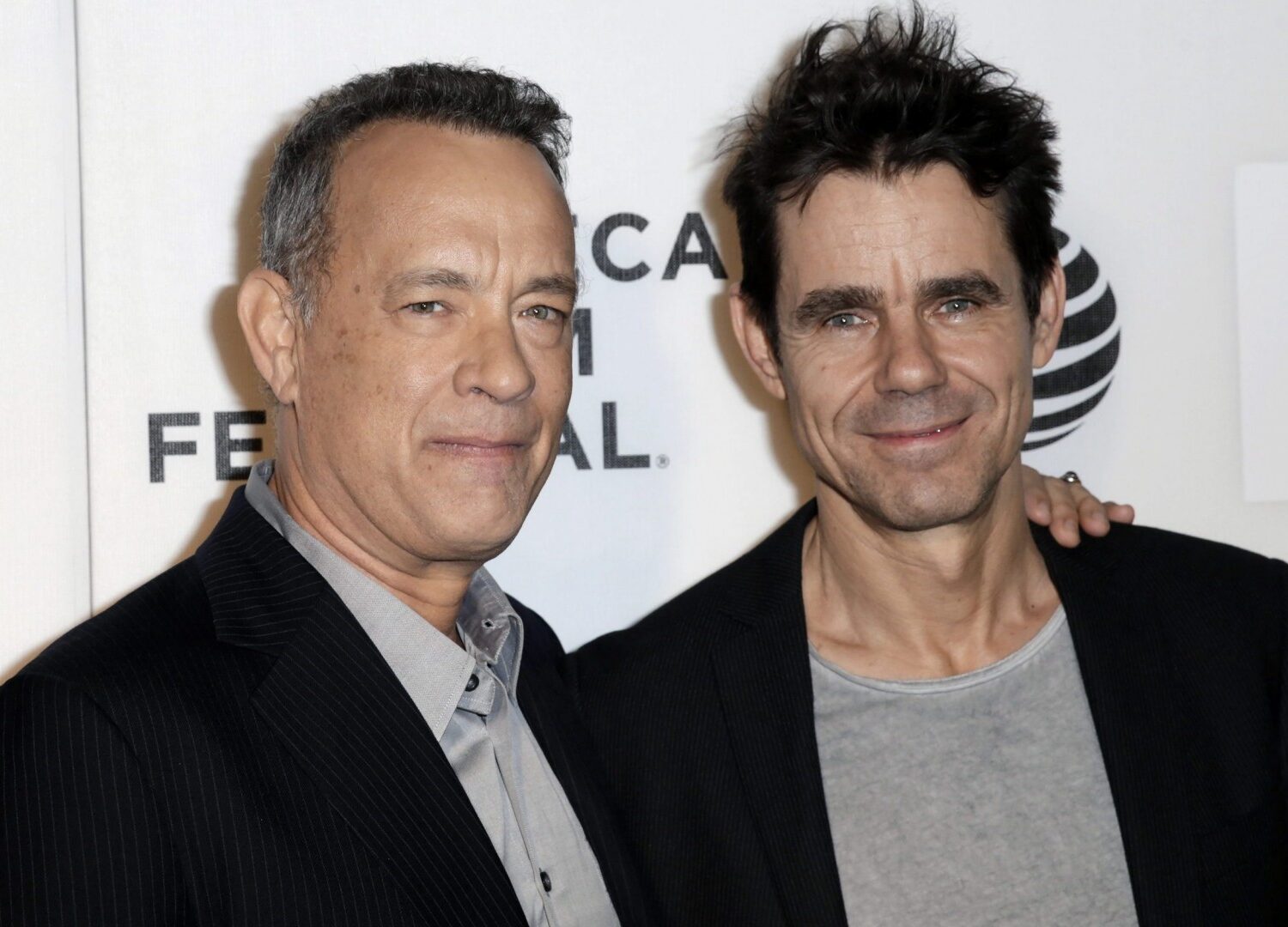
With “Run Lola Run,” Tom Tykwer had his breakthrough in 1998, followed by major international box-office success with “Perfume.” After his banking thriller “The International” and the love story “Three,” the director ventured into adapting “Cloud Atlas” by David Mitchell.
With a budget of $100 million, the epic filmed in Babelsberg is one of the most expensive German productions ever. As there, Tom Hanks again takes the lead role in Tykwer’s new work. In “A Hologram for the King” he plays a desperate travelling salesman who wants to sell the King of Saudi Arabia a high-tech telephone system. [030] staff member Dieter Oßwald spoke with the director.
Mr Tykwer, your last film, “Cloud Atlas,” had a budget of $100 million, making it one of the most expensive German productions ever. This time you’ve managed without a mega-budget – does filming feel more relaxed than with a mammoth project?
Tykwer: Each film feels different. The difficulties usually develop in ways you didn’t expect. In that sense, shooting is actually similarly exhausting — and equally rewarding — every time. This time we filmed in Western Sahara, practically at the end of the world. The usual infrastructure was missing, never mind the sorts of hotels you’d expect for a star like Tom Hanks. And yet, in this absurd world, we had an absolutely fantastic time.
 You’ve already worked with Tom Hanks on “Cloud Atlas.” How would you describe your relationship?
Tykwer: I’d say: we’re thick as thieves. In our need for harmony, we complement each other almost congenially, since we’re both the type who like to defuse complicated situations and aren’t itching for a row. Tom Hanks is a very affectionate person who exudes warmth and composure. He certainly doesn’t need to prove himself in the film industry any more.
You show Hanks naked in the shower, a degree of openness that Hollywood stars usually dislike intensely…
Tykwer: I could have asked Tom for more or less anything; I genuinely felt there were no restrictions. Once Hanks trusts you as a director, his commitment knows no bounds. That can almost be dangerous, as Tom is always pulling something new out of the hat and you just don’t want to stop.
You didn’t have to take the flak for his cringe-worthy appearance on “Wetten, dass…”, where Hanks was put on display?
Tykwer: That appearance was greatly exaggerated by the media. Tom has done so many silly TV shows in America throughout his career, he treats “Wetten, dass…” with a very relaxed shrug of the shoulders.
You’ve adapted several bestsellers for the screen. What potential pitfalls do you have to watch out for?
Tykwer: A film must always carve out a place alongside the book, rather than simply offering an illustrated retelling. An adaptation must stay true to the original’s vision but at the same time clearly set itself apart. After all, the audience shouldn’t be put off, nor should the pleasure of forming one’s own experiences while reading be taken away. With “A Hologram for the King,” the opportunity, above all, lay in the hidden, peculiar humour of the novel, and to develop this comedy in the film in an original way.
Would “Death of a Salesman 2.0” be an apt description for “A Hologram for the King”?
Tykwer: The comparison with “Death of a Salesman” would only apply if it were staged by Preston Sturges, Frank Capra and Alexander Payne — otherwise it would be far too depressing! Our “Hologram for the King” is, in the end, anything but depressing and despite all its drama offers plenty of humour.
Alongside the universal love story, there’s no lack of a critical look at Saudi Arabia’s social system. How far can you go with such criticism?
Tykwer: The film hides nothing, whether it’s the situation of women, the fate of foreign workers, or even executions — all are addressed. At the same time, we don’t want to present Saudi Arabia as simply a land of pure oppression. Backward as several areas may be, there are certainly modern aspects in everyday life. It’s relatively straightforward to travel abroad, which is quite normal for younger Saudis. Especially the younger generation will develop into a very interesting people, as they want to modernise their society. Even the royal family is getting younger, so change is only a matter of time.

In one scene, a motorway road sign points to Mecca, indicating that non-Muslims must turn left into their own lane. Do such signs actually exist?
Tykwer: The novel doesn’t include these signs, but they do exist in reality. What happens to Tom Hanks in the film is exactly what I experienced during my preparations for the shoot. My guide missed the “No Muslims” exit, and we carried on with slightly uneasy feelings, as detouring onto the sand tracks would have added six hours to our journey.
But you didn’t actually film the scenes in Mecca with Tom Hanks?
Tykwer: No, neither Tom nor I was there during filming, as only Muslims are allowed into Mecca. Those scenes were shot by a second, Muslim crew; the scenes with Tom Hanks were filmed in Morocco and then the two were edited together.
The soundtrack ranges from “Chicago” to “Talking Heads” — I assume the music rights for such legendary songs don’t come cheap?
Tykwer: The “Talking Heads” certainly aren’t free! (Laughs) I also had to get permission for Tom Hanks to sing “Once in a Lifetime” in the film with altered lyrics. The band’s office actually gave me David Byrne’s private number. It was quite a surreal moment speaking to him, as Byrne had been a real idol of mine in my youth. Luckily, he liked “Cloud Atlas” and had no issue granting us permission for Tom Hanks’ karaoke version.
You’re currently working on a sixteen-part series for ARD and the pay channel SKY, “Babylon Berlin”, set at the end of the twenties. What exactly will it be about?
Tykwer: ‘Babylon Berlin’ is a grand, multi-faceted police drama in a historical context that, I hope, will reflect contemporary Germany and Europe in surprising ways. Genre cinema, epic sweep, and political detective work come together uniquely in this thoroughly researched material. It’s fantastic that we’ve been given the opportunity to develop such a fascinating project in this innovative storytelling format. I’m hoping for many spectacular seasons!